
Introduction
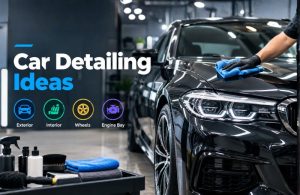
A car detailing kit is the single easiest way to bring showroom results home. Instead of guessing which spray bottle does what, you get a matched set of tools and chemicals built to clean, protect, and restore your vehicle from the wheels to the windshield.
Every vehicle owner needs one for a simple reason: a regular car wash removes surface dirt, but it doesn’t protect your paint, condition your leather, or stop swirl marks from building up over time. A good detailing kit does all three, and it does it for a fraction of what a professional detail costs.
This guide is for everyone the first-time buyer who just wants clean floor mats, the weekend enthusiast chasing a mirror-like paint finish, and the seasoned DIYer building out a professional-grade setup. Whether you drive a daily commuter, a family SUV, or a weekend show car, there’s a kit built for your needs.
By the end of this guide, you’ll understand what a detailing kit actually is, what belongs in one, how to pick the right one for your budget and skill level, and how to use it correctly from your first wash to your last coat of wax. Along the way, we’ll point you to deeper guides on each topic so you can go as far into the details as you want.
What Is a Car Detailing Kit?
A car detailing kit is a curated bundle of cleaning tools and chemical products designed to clean, correct, and protect a vehicle’s interior and exterior surfaces. Instead of buying a shampoo here and a microfiber towel there, a kit gives you a coordinated system built to work together.
Washing vs. detailing are not the same thing. Washing removes loose dirt and grime from the surface. Detailing goes further: it decontaminates the paint, corrects minor imperfections, conditions materials like leather and vinyl, and applies a layer of protection that keeps your car looking newer for longer.
Who needs a detailing kit? Realistically, anyone who owns a car. New car owners use one to preserve that factory finish. Used car owners use one to restore faded paint and worn interiors. Enthusiasts use one to chase competition-level results. Even people who get occasional professional details benefit from a kit for maintenance washes in between appointments.
The benefits are straightforward: better-looking paint, a healthier interior, stronger resale value, and long-term savings compared to paying for professional details every few weeks. We cover this topic in full in our dedicated guide, What Is a Car Detailing Kit?.
Why Every Car Owner Needs a Car Detailing Kit
Vehicle protection. Dirt, road grime, tree sap, and bird droppings are all mildly acidic or abrasive. Left on the paint, they slowly eat into the clear coat. A detailing kit lets you remove these contaminants safely and often.
Paint preservation. The right wash technique and the right towels prevent the fine scratches — swirl marks that dull a car’s finish over time. A detailing kit is built around minimizing that risk.
Resale value. A well-maintained exterior and interior can meaningfully increase what a buyer is willing to pay. Detailing is one of the highest-return investments you can make before selling or trading in a vehicle.
Cost savings. A single professional detail can cost more than an entire mid-range detailing kit. Buy once, and you can maintain that same level of care for years.
DIY convenience. You control the schedule. No waiting for an appointment, no dropping the car off for a full day just you, your driveway, and thirty minutes to an hour.
Types of Car Detailing Kits
Not every kit is built for the same job. Here’s how the main categories break down.
Interior Car Detailing Kit
Focused on cabin care upholstery cleaners, leather conditioners, glass cleaner, brushes for vents and crevices, and interior-safe protectants for plastic and vinyl trim.
Exterior Car Detailing Kit
Built around the paint, wheels, and glass. Expect shampoo, wash mitts, wheel cleaner, brushes, clay bar, and a wax or sealant.
Complete Car Detailing Kit
Combines interior and exterior products into one all-in-one package the most popular option for owners who want a single kit that covers the entire vehicle.
Professional Car Detailing Kit
Higher-grade chemicals, more specialized tools (foam cannons, polishers, iron removers), and often bulk sizes meant for frequent or commercial use.
DIY Car Detailing Kit
A simplified, beginner-friendly version of the above: fewer products, clear instructions, and a lower price point for someone just getting started.
Choosing between these comes down to how much of the car you want to cover and how deep you want to go. We break down the pros and cons of each in the Interior vs Exterior Car Detailing Kit.
What’s Included in a Professional Car Detailing Kit?
A full professional-grade kit typically includes:
- Car shampoo — a pH-balanced soap safe for paint and any existing wax or ceramic coating
- Wash mitt — usually microfiber or sheepskin, designed to lift dirt without grinding it into the paint
- Buckets (two-bucket method) — one for soapy water, one for rinsing your mitt
- Grit guard — a insert that traps grit at the bottom of the bucket, away from your wash mitt
- Microfiber towels — for drying, buffing, and interior wipe-downs
- Wheel brushes — shaped to reach behind spokes and inside barrels
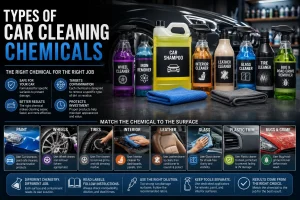
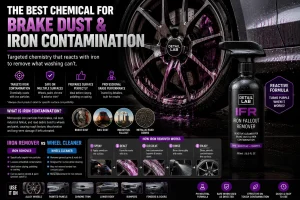
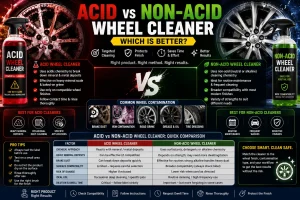
- Wheel cleaner — a stronger, often acidic or iron-reactive formula for brake dust and grime
- Glass cleaner — streak-free formula for windows and mirrors
- Interior cleaner — an all-purpose cleaner for plastic, fabric, and vinyl
- Leather cleaner — formulated to clean without drying out or cracking leather seats
- Trim cleaner/restorer — restores faded black plastic trim
- Clay bar — removes bonded surface contaminants that washing alone can’t lift
- Iron remover — dissolves embedded brake dust particles in the paint
- Tar remover — breaks down tar and asphalt spots
- Foam cannon — attaches to a pressure washer to pre-soak the car in thick cleaning foam
- Quick detailer — a spray-and-wipe product for fast touch-ups between washes
- Spray wax — a light, easy-to-apply protective layer
- Ceramic coating spray — a longer-lasting, hydrophobic protective layer
- Applicators — foam or microfiber pads for wax, sealant, or coating application
- Drying towels — large, absorbent waffle-weave or plush towels for a streak-free dry
Not every kit includes everything on this list, and that’s fine — the right combination depends on your vehicle and goals. We go item-by-item in Essential Items Every Car Detailing Kit Should Include.
How to Choose the Best Car Detailing Kit
A few questions will point you to the right kit fast:
- Budget. Entry-level kits start under $50; professional-grade kits can run several hundred dollars.
- Vehicle type. A truck with a bed liner and heavy road grime needs different tools than a garage-kept sedan.
- Skill level. Beginners benefit from simpler, foolproof formulas. Experienced users can handle stronger chemicals and multi-step correction products.
- Professional vs. DIY use. If you’re detailing multiple cars regularly, bulk professional supplies pay for themselves quickly.
- Frequency of use. Weekly washers need durable, easy-application products. Occasional users may prioritize convenience over longevity.
- Chemical quality. Look for pH-balanced, paint-safe formulas rather than generic household cleaners.
- Accessories included. More brushes, applicators, and towels mean fewer separate purchases later.
For a full breakdown with product-level recommendations, see Best Car Detailing Kit.
Car Detailing Kit vs. Car Wash Kit
These terms get used interchangeably, but they’re not the same thing.
| Feature | Car Detailing Kit | Car Wash Kit |
| Purpose | Clean, correct, and protect | Clean surface dirt only |
| Typical contents | Shampoo, towels, wax/coating, brushes, interior products | Shampoo, sponge, sometimes a bucket |
| Paint protection | Yes — wax, sealant, or ceramic coating included | Rarely |
| Interior care | Often included | Not included |
| Best for | Long-term paint health and full vehicle care | Quick, basic surface washing |
| Value over time | Higher — prevents damage and preserves resale value | Lower — maintenance only |
Which offers better value? For most owners, a detailing kit is the better long-term investment because it protects the car, not just cleans it. A wash kit works fine as a quick refresh between full details.
Who should buy which? If you only ever plan to hose off dust, a wash kit is enough. If you care about paint condition, interior longevity, or resale value, invest in a detailing kit. Full comparison here: Car Detailing Kit vs Car Wash Kit.
DIY Car Detailing Kit vs. Professional Car Detailing Kit
| Factor | DIY Kit | Professional Kit |
| Price | Lower ($30–$80) | Higher ($100–$400+) |
| Performance | Good for regular maintenance | Excellent, showroom-level results |
| Tools included | Basic (mitt, towels, spray bottle) | Advanced (foam cannon, polisher, multiple brushes) |
| Chemical strength | Mild, beginner-safe | Concentrated, professional-grade |
| Results | Clean, protected car | Corrected paint, deeper gloss, longer-lasting protection |
| Maintenance required | Simple upkeep | More involved, but more rewarding |
Neither option is objectively “better” — it depends on your goals. We compare real-world results from both in Professional vs DIY Car Detailing Kits.
Step-by-Step Guide to Detailing Your Car Using One Kit
- Pre-rinse. Hose down the entire car to remove loose dirt before any contact washing begins.
- Foam wash. Apply a thick layer of foam using a foam cannon or pump sprayer and let it dwell to loosen grime.
- Wheel cleaning. Clean wheels and tires first, using a dedicated wheel cleaner and brush, before touching the paint.
- Hand wash. Use the two-bucket method with a wash mitt to clean the paint section by section, from top to bottom.
- Drying. Use a large microfiber or waffle-weave towel to dry the car before water spots can form.
- Clay bar. Glide a clay bar over the paint with lubricant to lift bonded contaminants you can feel but not see.
- Paint decontamination. Use an iron remover and tar remover to strip out embedded particles the clay bar leaves behind.
- Polishing. Apply a polish to remove light swirl marks and restore gloss (optional, depending on paint condition).
- Wax. Apply a wax or paint sealant for a protective, glossy finish.
- Ceramic coating. For longer-term protection, apply a ceramic coating spray over the waxed surface.
- Interior cleaning. Vacuum, wipe down surfaces, and condition leather or vinyl.
- Glass cleaning. Clean all windows inside and out with a streak-free glass cleaner.
- Final inspection. Walk around the car in good lighting to check for missed spots, streaks, or product residue.
For the fully detailed, product-by-product walkthrough, read our Complete Car Detailing Process.
Common Mistakes When Using a Car Detailing Kit
- Using household cleaners like dish soap or glass cleaner not made for cars they strip wax and can damage trim.
- Wrong towels — using the same towel on wheels and paint spreads brake dust and causes scratches.
- Skipping drying — air-drying leaves water spots that etch into the clear coat over time.
- Cross contamination — washing wheels and paint with the same mitt or bucket water.
- Too much product — more shampoo or polish doesn’t mean better results, often just more residue to remove.
- Wrong order — washing before cleaning wheels, or waxing before claying, undoes your own work.
- Sunlight application — applying products in direct sun causes streaking and premature drying.
- Dirty brushes — reusing a brush loaded with old grime scratches the next surface it touches.
Full detail on avoiding these in Common Mistakes to Avoid When Detailing Your Car.
How Often Should You Detail Your Car?
Detailing frequency depends heavily on how the car is used:
- Daily driver: A quick wash every 1–2 weeks, full detail every 2–3 months.
- Luxury car: Monthly maintenance details to protect a higher-value finish.
- SUV: Every 2–3 weeks due to higher exposure to mud, kids, and cargo.
- Truck: Every 2 weeks, more often if used for work or off-road driving.
- Commercial vehicle: Weekly washing, with a full detail monthly to maintain a professional appearance.
- Weekend car: A full detail before and after storage, plus light maintenance after each drive.
See exact schedules and reasoning in How Often Should You Detail Your Car?.
How to Maintain Your Car Detailing Kit
- Cleaning brushes after every use to remove trapped grit before it dries in the bristles.
- Washing microfiber towels separately, without fabric softener, to preserve their absorbency.
- Chemical storage in a cool, dark place, away from freezing temperatures and direct sunlight.
- Shelf life — check expiration or “best by” guidance, since some chemicals separate or lose effectiveness over time.
- Replacing tools like foam cannon nozzles, worn mitts, or flattened applicator pads as they wear out.
- Bucket maintenance — rinse grit guards and buckets after each wash to prevent grime buildup.
A well-maintained kit lasts years and performs better with every wash. Full guide: How to Maintain Your Car Detailing Kit.
Best Car Detailing Kit for Beginners
New to detailing? Keep it simple.
What beginners should buy: A basic complete kit with shampoo, a wash mitt, two buckets, microfiber towels, and a spray wax or all-in-one sealant.
Essential tools only: Skip the foam cannon and polisher until you’ve mastered the basics. A bucket, mitt, and good towels get you 80% of the way to a clean, protected car.
Budget recommendations: Expect to spend $40–$90 on a solid starter kit that covers both interior and exterior needs.
Common beginner mistakes: Over-applying wax, using dish soap instead of car shampoo, and skipping the two-bucket method are the three most common early errors.
Full beginner walkthrough here: Best Car Detailing Kit for Beginners.
Car Detailing Kit Buying Checklist
Use this checklist before you buy:
- [ ] Does the kit match my vehicle type (sedan, SUV, truck)?
- [ ] Does it cover both interior and exterior, or do I need two kits?
- [ ] Are the chemicals pH-balanced and paint-safe?
- [ ] Does it include enough microfiber towels for different tasks?
- [ ] Is there a dedicated wheel cleaner and brush?
- [ ] Does it include a form of paint protection (wax, sealant, or coating)?
- [ ] Is the kit sized appropriately for my budget and skill level?
- [ ] Are refills or replacement parts easy to find later?
- [ ] Does it fit my planned detailing frequency (weekly vs. monthly)?
For the expanded, product-linked version of this checklist, see our full Buying Guide.
Car Detailing Checklist (Printable)
Exterior
- [ ] Pre-rinse entire vehicle
- [ ] Foam wash and dwell time
- [ ] Two-bucket hand wash
- [ ] Dry with microfiber or waffle-weave towel
Wheels
- [ ] Apply wheel cleaner
- [ ] Scrub with dedicated wheel brush
- [ ] Rinse thoroughly
- [ ] Dress tires
Interior
- [ ] Vacuum seats, carpets, and trunk
- [ ] Wipe down dash and console
- [ ] Clean and condition leather/vinyl
- [ ] Clean vents and crevices with detailing brush
Glass
- [ ] Clean interior glass
- [ ] Clean exterior glass
- [ ] Wipe mirrors
Engine Bay
- [ ] Cool engine before cleaning
- [ ] Cover sensitive electrical components
- [ ] Degrease and rinse gently
- [ ] Dry and dress plastic components
Protection
- [ ] Clay bar treatment (as needed)
- [ ] Apply wax, sealant, or ceramic coating
- [ ] Apply trim restorer to exterior plastic
Maintenance
- [ ] Clean brushes and mitts
- [ ] Wash microfiber towels separately
- [ ] Store chemicals properly
- [ ] Restock low or expired products
Download and print the full version from our dedicated Car Detailing Checklist page.
Frequently Asked Questions
1. What is included in a basic car detailing kit?
A basic kit typically includes car shampoo, a wash mitt, microfiber towels, and a spray wax or sealant enough to clean and protect the exterior.
2. Is a car detailing kit worth the money?
Yes, for most owners. A kit costs less than one or two professional details and can be reused for years, making it more cost-effective long-term.
3. Can I use a car detailing kit on a brand-new car?
Yes. In fact, using one early helps preserve the factory paint finish and prevents the buildup of contaminants and swirl marks.
4. How much does a good car detailing kit cost?
Beginner kits start around $30–$50, mid-range complete kits run $70–$150, and professional-grade kits can exceed $300.
5. What’s the difference between a car wash kit and a car detailing kit?
A wash kit only cleans surface dirt. A detailing kit cleans, corrects imperfections, and applies long-term paint or interior protection.
6. Do I need a foam cannon for a basic detailing kit?
No. A foam cannon speeds up the pre-wash stage and improves results, but a bucket and hose work fine for beginners.
7. How often should I use my car detailing kit?
Most daily drivers benefit from a quick wash every 1–2 weeks and a full detail every 2–3 months.
8. What’s the best interior car detailing kit for leather seats?
Look for a kit that includes a dedicated leather cleaner and conditioner, since general-purpose interior cleaners can dry out leather over time.
9. Can I use dish soap instead of car shampoo?
It’s not recommended. Dish soap strips wax and protective coatings and can leave paint more vulnerable to contaminants.
10. What size microfiber towels should be in my kit?
A mix of large towels (16″x16″ or bigger) for drying and smaller ones for glass and interior wipe-downs covers most needs.
11. Is a ceramic coating better than wax?
Ceramic coatings last significantly longer and offer stronger protection, but wax is easier to apply and more budget-friendly for beginners.
12. How do I know if my car needs a clay bar treatment?
If the paint feels rough or gritty after washing even though it looks clean it likely has bonded contaminants a clay bar can remove.
13. What’s the best car detailing kit for SUVs and trucks?
Look for kits with extra wheel and tire products, larger towel counts, and stronger degreasers for higher exposure to mud and road grime.
14. Can I use the same kit for multiple vehicles?
Yes, as long as you have enough product volume and replace consumables like towels and applicator pads as needed.
15. How long does a car detailing kit typically last?
Tools like brushes, mitts, and buckets can last years with proper care; chemicals typically last 6–24 months depending on the product and storage conditions.
Conclusion
Choosing the right car detailing kit comes down to matching the tools and chemicals to your vehicle, your skill level, and how often you plan to use them. Once you have the right kit, maintaining it properly clean brushes, well-stored chemicals, and fresh towels keeps every future wash as effective as the first.
Build a simple, consistent detailing routine, and you’ll protect your paint, extend the life of your interior, and hold onto more of your car’s resale value for years to come. Explore the linked guides throughout this article to go deeper into any step of the process.