
Walk into any auto care aisle or browse online, and you’ll see two very similar-sounding products: the car wash kit and the car detailing kit. Many first-time buyers assume they’re the same thing with different names. They’re not.
A car wash kit is built for routine cleaning. A car detailing kit is built for deeper care, paint protection, and long-term vehicle maintenance. Picking the wrong one wastes money, and picking the right one saves you both time and future repair costs.
In this guide, you’ll learn exactly what separates a car wash kit from a car detailing kit, what’s included in each, which one fits your budget and skill level, and whether you actually need both. By the end, you’ll know precisely which kit belongs in your garage.
What Is a Car Wash Kit?
A car wash kit is a basic cleaning bundle designed to remove surface dirt, dust, and grime from your vehicle’s exterior. It’s the automotive equivalent of a quick shower, refreshing and focused on the surface.
Primary purpose: Keep your car visibly clean between deeper cleaning sessions.
Typical products included:
- Car shampoo
- Wash bucket
- Wash mitt
- Microfiber drying towel
- Sometimes a basic wheel cleaner or glass cleaner
Best use cases: Weekly or biweekly maintenance washes, removing road grime, bird droppings, and dust before they bond to the paint.
Advantages:
- Affordable entry point for new car owners
- Simple to use, no experience required
- Fast — most washes take 20–30 minutes
- Keeps your car looking fresh week to week
Limitations:
- Doesn’t remove embedded contaminants like tar or iron particles
- No paint protection or gloss enhancement
- Doesn’t address interior surfaces like leather or dashboards
- Won’t correct swirl marks, oxidation, or faded trim
A car wash kit answers the question “how do I keep my car clean?” It doesn’t answer “how do I protect my car’s finish?” That’s where detailing comes in.
What Is a Car Detailing Kit?
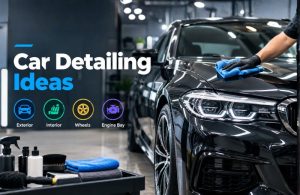
A car detailing kit is a comprehensive system designed to clean, restore, and protect your vehicle inside and out. Think of it as the difference between washing your face and going through a full skincare routine detailing goes several layers deeper.
How detailing goes beyond washing: Detailing addresses contamination that a regular wash can’t remove, such as bonded tree sap, iron deposits, and oxidized paint. It also restores surfaces that washing alone doesn’t touch.
Paint protection benefits: A detailing kit typically includes products like clay bars, spray wax, or ceramic coating sprays that create a protective barrier against UV rays, road salt, and environmental fallout.
Interior and exterior care: Beyond the paint, detailing kits include leather cleaner, dashboard cleaner, and interior cleaner to keep cabin surfaces from cracking, fading, or staining.
Long-term vehicle maintenance: Regular detailing slows down paint degradation, preserves resale value, and reduces the need for costly paint correction or reupholstering down the line.
A car detailing kit answers a bigger question: “how do I protect my investment for years, not just weeks?”
Car Detailing Kit vs Car Wash Kit: Key Differences
| Category | Car Wash Kit | Car Detailing Kit | Winner |
| Purpose | Routine surface cleaning | Deep cleaning, restoration, and protection | Detailing Kit (for long-term care) |
| Cleaning Depth | Surface-level dirt and dust | Removes bonded contaminants (tar, iron, sap) | Detailing Kit |
| Paint Protection | None | Wax, sealant, or ceramic coating included | Detailing Kit |
| Interior Cleaning | Rarely included | Leather, dashboard, and interior cleaners included | Detailing Kit |
| Exterior Cleaning | Shampoo wash only | Wash, clay bar, polish, and protection | Detailing Kit |
| Tools Included | Bucket, mitt, towel | Foam cannon, brushes, applicator pads, multiple towels | Detailing Kit |
| Chemicals Included | Shampoo, sometimes wheel cleaner | Multiple specialized chemicals for each surface | Detailing Kit |
| Finish Quality | Clean but flat | Glossy, protected, showroom-like | Detailing Kit |
| Time Required | 20–30 minutes | 2–4 hours for a full session | Wash Kit (for speed) |
| Cost | Lower upfront cost | Higher upfront cost | Wash Kit (for budget) |
| Skill Level | Beginner-friendly | Requires some technique and patience | Wash Kit (for ease) |
| Maintenance Frequency | Weekly or biweekly | Monthly or seasonal | Depends on goals |
| Best For | Quick upkeep, new car owners | Enthusiasts, resale prep, long-term protection | Depends on goals |
The wash kit wins on speed, simplicity, and cost. The detailing kit wins almost everywhere else, especially where protection and finish quality matter.
Products Included in a Car Wash Kit
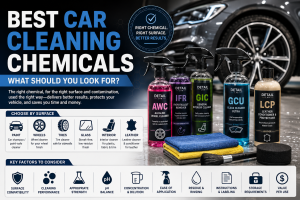
Car Shampoo
A pH-balanced shampoo lifts dirt without stripping wax or sealant. It’s the foundation of every wash.
Wash Bucket
Often paired with a grit guard, the bucket separates dirty water from your wash mitt, reducing the chance of dragging grit across the paint.
Wash Mitt
A soft microfiber or lambswool mitt lifts dirt away from the surface instead of grinding it in, unlike a household sponge.
Microfiber Drying Towel
A large, absorbent towel dries the car quickly and reduces water spots without scratching the clear coat.
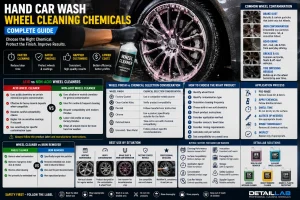
Wheel Cleaner
Basic kits sometimes include a mild wheel cleaner to remove brake dust and road grime from rims.
Tire Cleaner
Removes browning and grime buildup on tire sidewalls, though it typically leaves a matte rather than glossy finish.
Glass Cleaner
A streak-free formula for windows and mirrors, often ammonia-free to avoid damaging tinted glass.
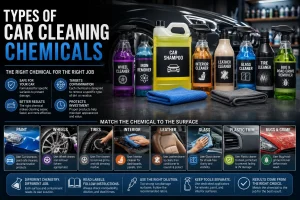
Products Included in a Car Detailing Kit
Car Shampoo
Same foundational role as in a wash kit, but often a higher-concentration, gloss-enhancing formula used as the first step before deeper work begins.
Foam Cannon
Attaches to a pressure washer to blanket the car in thick foam, lifting dirt before contact and reducing the risk of scratching.
Microfiber Towels
Detailing kits include multiple towel types plush drying towels, waffle-weave buffing towels, and edgeless towels for chemical application.
Wash Mitt
Used the same way as in a wash kit, but often a premium version designed to work alongside foam pre-wash for maximum safety.
Wheel Cleaner
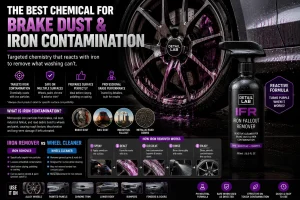
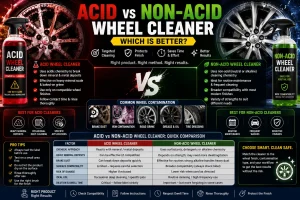
A stronger, iron-reactive formula that turns purple or red as it dissolves embedded brake dust particles.
Wheel Brush
A soft-bristle brush reaches into wheel spokes, lug nuts, and barrels that a mitt can’t access.
Clay Bar
Glides across paint to pull out embedded contaminants like tar, tree sap, and industrial fallout that washing alone can’t remove.
Iron Remover
A spray that dissolves bonded iron particles from brake dust, often used before clay for a deeper decontamination.
Interior Cleaner
An all-purpose formula for fabric, plastic, and vinyl surfaces throughout the cabin.
Leather Cleaner
Gently lifts oils and dirt from leather seats without drying out or cracking the material.
Dashboard Cleaner
Removes dust and UV-fading residue while restoring a natural, non-greasy finish to plastic and vinyl trim.
Tire Dressing
Adds a rich, long-lasting shine to tire sidewalls, unlike the flatter finish of basic tire cleaners.
Quick Detailer
A spray-and-wipe product used between full washes to remove light dust and add gloss in minutes.
Spray Wax
A fast, easy-to-apply layer of protection that boosts shine and adds a hydrophobic barrier against water and UV rays.
Ceramic Coating Spray
A more durable protective layer than wax, offering months of UV resistance, water beading, and easier future cleaning.
Paint Correction Products
Polishes and compounds that reduce swirl marks, light scratches, and oxidation, restoring clarity and depth to the paint.
Which Kit Is Best for Beginners?
Who should buy a car wash kit: New car owners, renters, or anyone who just wants a clean-looking car without investing time or money into paint care. It’s also a smart starting point if you’re unsure how committed you’ll be to a regular car care routine.
Who should buy a car detailing kit: Owners who want to protect their paint, maintain resale value, or already enjoy the process of car care. It also suits anyone dealing with contamination, fading, or a car that hasn’t been detailed in a while.
Budget considerations: A wash kit typically costs a fraction of a detailing kit, since it includes fewer products and no protective chemicals.
Ease of use: Washing is nearly foolproof. Detailing involves more steps, tools, and technique, though most kits include instructions that make the process approachable.
Recommended upgrade path: Start with a wash kit to build a consistent washing habit, then add a detailing kit once you’re ready to protect and enhance the paint. Many owners eventually use both together.
Which Kit Delivers Better Long-Term Value?
Paint longevity: Detailing products like clay bars, sealants, and ceramic coatings shield the clear coat from UV damage, oxidation, and contamination — problems a wash kit can’t prevent.
Vehicle appearance: A washed car looks clean. A detailed car looks deep, glossy, and well-maintained, which is noticeable even to non-car people.
Resale value: A car with a well-maintained paint finish and clean interior consistently appraises higher than one that’s only ever been surface-washed.
Maintenance costs: Regular detailing reduces the odds of needing professional paint correction later, which can cost significantly more than a detailing kit itself.
Time investment: Detailing takes longer per session, but its protective effects last weeks to months, unlike a wash, which only keeps the car clean for days.
Practical example: A car washed weekly for a year but never detailed may show swirl marks, water spots, and fading trim by year two. A car washed and detailed every few months typically retains its gloss and finish well beyond that point.
Can You Use Both Together?
Most experienced car owners eventually own both kits, and for good reason — they solve different problems.
Why many car owners own both kits: A wash kit handles the frequent, light-duty cleaning. A detailing kit handles the deeper, less frequent protective work. Neither fully replaces the other.
How a wash kit complements a detailing kit: Regular washing prevents dirt and grime from building up between detailing sessions, which makes each detailing session faster and more effective.
Suggested maintenance schedule:
- Weekly: Quick wash with a wash kit
- Monthly: Quick detailer spray for light gloss maintenance
- Every 3–4 months: Full detailing session with clay bar, wax, or ceramic spray
- Seasonally: Deeper interior cleaning and paint protection top-up
Common Buying Mistakes
Buying only the cheapest kit: Ultra-budget kits often use thin towels and weak chemicals that can scratch paint or leave streaks.
Ignoring paint protection: Skipping wax, sealant, or ceramic products leaves paint exposed to UV damage and contamination.
Choosing poor-quality towels: Low-grade microfiber towels can trap grit and cause fine scratches, undoing the benefit of a careful wash.
Using household cleaners: Dish soap and all-purpose cleaners strip wax, dry out rubber seals, and can damage sensitive surfaces like leather or tinted glass.
Buying products you don’t need: Loading up on specialty items before mastering the basics wastes money — start with core products and build from there.
Frequently Asked Questions
Is a car detailing kit better than a car wash kit?
It depends on your goal. A detailing kit offers deeper cleaning and paint protection, while a wash kit is better for quick, routine upkeep.
Can a car wash kit replace a detailing kit?
No. A wash kit removes surface dirt but doesn’t protect paint or address bonded contaminants, interior wear, or oxidation the way a detailing kit does.
Which kit should beginners buy?
Beginners often start with a wash kit to build a washing habit, then add a detailing kit once they’re ready for deeper care.
How often should I use a detailing kit? Most owners detail their car every three to four months, with lighter touch-ups like quick detailer sprays used monthly.
Do detailing kits include ceramic coating?
Some higher-end detailing kits include a ceramic coating spray, though full ceramic coating systems are often sold separately.
Is detailing worth the extra cost?
Yes, for most owners. Detailing protects paint, preserves resale value, and reduces the likelihood of costly correction work later.
What’s the difference between wax and ceramic coating?
Wax offers shorter-term shine and protection, typically lasting weeks, while ceramic coating provides a more durable barrier lasting months.
Can I use a detailing kit every week?
You can, but it’s usually unnecessary. Weekly washing plus periodic detailing every few months is more efficient and cost-effective.
Do I need a foam cannon for detailing?
It’s not mandatory, but a foam cannon reduces the risk of scratching by loosening dirt before contact with a mitt.
Will a detailing kit remove scratches?
Light swirl marks can often be improved with paint correction products included in advanced kits, but deep scratches may need professional attention.
Is a clay bar necessary for every detailing session?
No. Clay bars are typically used every few months or when the paint feels rough to the touch, not with every wash.
What should a beginner detailing kit include?
Look for shampoo, microfiber towels, a wash mitt, a wheel cleaner, and a basic spray wax as a solid starting point.
Key Takeaways Box
- A car wash kit handles routine surface cleaning; a car detailing kit handles deep cleaning, restoration, and protection.
- Wash kits are cheaper, faster, and beginner-friendly.
- Detailing kits protect paint, improve resale value, and deliver a noticeably better finish.
- Most experienced owners use both — washing weekly and detailing every few months.
- Skipping paint protection or buying low-quality towels are the most common beginner mistakes.
Pro Tips Box
- Always wash before detailing — never apply wax or sealant over a dirty surface.
- Use the two-bucket method (one for soap, one for rinsing) to reduce swirl marks.
- Store microfiber towels separately from other cleaning cloths to avoid cross-contamination with lint or debris.
- Apply quick detailer between full details to maintain gloss without a full wash.
- Test any new chemical on a small, hidden panel before full application.
Buyer’s Decision Checklist
Ask yourself the following before choosing a kit:
- [ ] Do I want a quick weekly clean, or long-term paint protection?
- [ ] Is my budget under $50, or am I ready to invest $100+?
- [ ] Do I have 30 minutes or 2–4 hours to spend on car care?
- [ ] Is my car new, or does it show fading, swirl marks, or contamination?
- [ ] Am I planning to sell or trade in the car within the next few years?
- [ ] Do I want to eventually build up to a full detailing routine?
If you checked more boxes toward speed and budget, start with a car wash kit. If you checked more boxes toward protection and long-term value, a car detailing kit is the better investment.
Car Wash Kit vs Car Detailing Kit: Quick Comparison
| Feature | Car Wash Kit | Car Detailing Kit |
| Best For | Quick, routine cleaning | Deep cleaning and protection |
| Cost | Lower | Higher |
| Time | 20–30 minutes | 2–4 hours |
| Paint Protection | No | Yes |
| Interior Care | No | Yes |
| Skill Needed | Minimal | Moderate |
| Frequency | Weekly | Every 3–4 months |
Conclusion
A car wash kit and a car detailing kit aren’t competitors they’re two tools built for two different jobs. A wash kit keeps your car looking clean week to week, while a detailing kit protects your paint, restores your interior, and preserves your car’s value over the long run.
If you’re a new owner or just want a fast, low-maintenance routine, a car wash kit is the right starting point. If you care about long-term appearance, resale value, and genuine paint protection, a detailing kit is worth the investment. For most car owners, the best strategy combines both regular washing to maintain cleanliness, paired with periodic detailing to protect and restore. That combination is what keeps a vehicle looking its best for years, not just weeks.