
Your car takes a beating from two very different directions. Dust, spilled coffee, and crumbs pile up inside the cabin, while sun, road grime, and bug splatter attack the paint outside. That’s why a single “one-size-fits-all” cleaner rarely gets the job done well.
Choosing the right car detailing kit interior and exterior setup matters because the cabin and the paintwork face completely different kinds of wear. Interior detailing focuses on fabric, leather, plastic, and glass inside the cabin. Exterior detailing focuses on paint, wheels, tires, and protective coatings outside the vehicle.
In this guide, you’ll learn exactly what separates an interior kit from an exterior kit, what products belong in each one, and how to decide whether you need one, the other, or both. By the end, you’ll know precisely which detailing kit fits your car and your routine.
Looking to build the perfect detailing setup? Explore our Car Detailing Kit Guide to learn how to choose the right tools, cleaning products, and accessories for every stage of vehicle care. Whether you’re a beginner or a professional detailer, this complete guide will help you create an effective kit for cleaning, protecting, and maintaining your car with confidence.
What Is an Interior Car Detailing Kit?
An interior car detailing kit is a bundle of cleaning tools and chemicals designed specifically for the cabin of your vehicle. It typically includes an interior cleaner, a vacuum, microfiber towels, and detailing brushes built to handle dashboards, seats, carpets, and trim.
The purpose of an interior car detailing kit is to remove dust, stains, odors, and grime from surfaces you touch every day. Unlike exterior products, interior formulas are designed to be gentle on skin contact and safe for enclosed spaces with limited airflow.
The benefits go beyond appearance. A clean cabin reduces allergens, extends the life of upholstery and leather, and keeps plastic trim from fading or cracking under UV exposure through the windshield.
This kit suits daily commuters, parents with kids or pets in the car, and anyone who spends significant time inside their vehicle. If your dashboard collects dust weekly or your seats show wear, an interior kit should be your starting point.
What Is an Exterior Car Detailing Kit?
An exterior car detailing kit is a collection of tools and products built to wash, protect, and enhance the outside of your vehicle. It usually includes car shampoo, a wash mitt, wheel cleaner, clay bar, and some form of paint protection like wax or sealant.
The purpose of exterior detailing is to safely lift dirt without scratching the paint, then add a protective layer that shields the clear coat from UV rays, oxidation, and contaminants. These products are formulated for outdoor use and tougher grime like tar, tree sap, and brake dust.
The benefits include a noticeably glossier finish, better resale value, and paint that resists swirl marks and fading over time. Regular exterior detailing also catches small paint issues before they become expensive repairs.
This kit is ideal for anyone who parks outside, drives frequently on highways, or wants their car to hold its shine and value. Owners chasing a showroom look, or those prepping a car for sale, benefit the most.
Interior vs Exterior Car Detailing Kit: Key Differences
| Category | Interior Kit | Exterior Kit |
| Purpose | Clean and refresh cabin surfaces | Wash, correct, and protect paintwork |
| Surfaces Cleaned | Seats, dashboard, carpets, glass, trim | Paint, wheels, tires, glass, undercarriage |
| Tools Included | Brushes, microfiber towels, vacuum | Wash mitt, foam cannon, buckets, applicators |
| Cleaning Chemicals | Interior cleaner, leather conditioner, fabric cleaner | Car shampoo, wheel cleaner, iron remover |
| Paint Protection | Not applicable | Wax, sealant, or ceramic coating |
| Interior Protection | UV protectant for dash and trim | Not applicable |
| Time Required | 30–60 minutes | 1–3 hours (longer with paint correction) |
| Skill Level | Beginner-friendly | Beginner to advanced, depending on step |
| Maintenance Frequency | Weekly to biweekly | Every 2–4 weeks, plus protection every few months |
| Best For | Daily drivers, families, pet owners | Car enthusiasts, resale prep, show cars |
What Products Are Included in an Interior Car Detailing Kit?
Interior Cleaner
An all-purpose interior cleaner tackles everyday dust, fingerprints, and light stains on hard and soft surfaces alike. It’s the workhorse product you’ll reach for during nearly every cabin cleaning session.
Use it on door panels, center consoles, and cup holders. Spray onto a microfiber towel first rather than directly onto surfaces to avoid oversaturation near electronics.
Dashboard Cleaner
Dashboard cleaner is formulated to cut through dust and UV-baked grime without leaving a greasy residue. A quality formula also includes UV protectants that guard against cracking and fading.
Apply it monthly, or more often in hot climates where sun exposure is intense. Choose a matte-finish formula if you want to avoid the glare that glossy dashboard products can cause on the windshield.
Leather Cleaner & Conditioner
Leather cleaner removes body oils and dirt, while conditioner replenishes moisture to prevent cracking. Together, they keep leather seats soft and supple for years.
Use the cleaner first, then follow with conditioner every one to two months. Skipping conditioner is one of the fastest ways to age leather prematurely.
Fabric & Upholstery Cleaner
Fabric cleaner lifts stains and odors from cloth seats without soaking the padding underneath. Most formulas foam up to lift dirt to the surface, where it’s easily wiped or vacuumed away.
Test on a hidden area first, then treat stains as soon as they happen. Fresh spills are always easier to remove than set-in stains.
Carpet Cleaner
Carpet cleaner is built for tougher, ground-in dirt that regular vacuuming can’t fully remove. It’s especially useful for floor mats that see mud, sand, and salt during winter months.
Apply, agitate with a brush, and extract with a wet/dry vacuum if available. Let carpets dry fully before driving to prevent mildew odors.
Glass Cleaner
Interior glass cleaner is ammonia-free to avoid damaging tinted windows and to prevent harsh fumes in an enclosed cabin. It leaves a streak-free finish that improves visibility and safety.
Spray onto a towel rather than the glass directly to keep overspray off dashboard electronics. Clean interior glass every time you detail the cabin, since fingerprints and haze build up quickly.
Interior Detailing Brushes
Detailing brushes with soft bristles reach into vents, seams, and crevices that towels can’t access. Different brush sizes handle everything from air vents to stitching on leather seats.
Use a boar’s-hair brush for delicate trim and a stiffer nylon brush for carpets. Brushes make a noticeable difference in how thorough your interior detail turns out.
Microfiber Towels
Microfiber towels are gentle, highly absorbent, and reusable, making them essential for wiping down every interior surface. Keep a dedicated set for interior use only, separate from exterior towels.
Use one towel for cleaning chemicals and a separate one for buffing off residue. Wash towels regularly without fabric softener, which can reduce their absorbency.
Vacuum Cleaner
A car-specific vacuum with strong suction and narrow attachments removes crumbs, sand, and pet hair from seats, carpets, and tight corners. Cordless models offer convenience for quick cleanups.
Vacuum before applying any liquid cleaners so you’re not grinding debris deeper into fabric or carpet fibers. Vacuum weekly for cars that see frequent food or pet exposure.
Odor Eliminator
An odor eliminator neutralizes smells at the source instead of masking them with fragrance. Enzyme-based formulas work well on pet, smoke, and food odors.
Spray on fabric and carpet after cleaning, then let the cabin air out with windows down. Address odor sources like spills or mildew directly for lasting results.
What Products Are Included in an Exterior Car Detailing Kit?
Car Shampoo
Car shampoo is a pH-balanced soap designed to lift dirt without stripping wax or sealant from the paint. It’s the foundation of every exterior wash.
Use a dedicated automotive shampoo rather than dish soap, which strips protective coatings. Wash in the shade to prevent the soap from drying and streaking before you can rinse it off.
Foam Cannon
A foam cannon attaches to a pressure washer to blanket the car in thick suds, loosening dirt before any contact touches the paint. This pre-wash step dramatically reduces the risk of scratching.
Let the foam dwell for a few minutes, then rinse before hand washing. It’s especially valuable for cars that haven’t been washed in a while.
Wash Mitt
A microfiber or lambswool wash mitt holds soap and lifts dirt away from the paint surface instead of grinding it in like a sponge would. Its deep pile traps grit safely inside the fibers.
Use the two-bucket method, dipping the mitt in a rinse bucket between panels to remove trapped dirt. Replace mitts once the fibers become matted or stiff.
Buckets & Grit Guard
Two buckets, one for soapy water and one for rinsing, prevent dirt from being reapplied to the paint during washing. A grit guard insert at the bottom traps debris below the mitt’s reach.
Always rinse your mitt in the guard bucket before reloading with soap. This simple system is one of the most effective ways to prevent swirl marks.
Wheel Cleaner
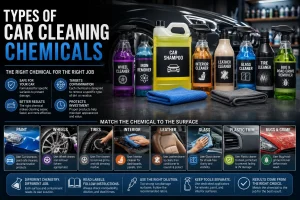
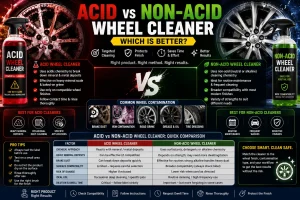
Wheel cleaner is formulated to cut through brake dust, which is more acidic and stubborn than regular road grime. Non-acidic formulas are safest for most wheel finishes, including chrome and clear-coated alloys.
Apply to cool wheels, never in direct sun, and let it dwell briefly before scrubbing. Clean wheels first, before washing the rest of the car, to avoid splashing dirty water onto clean paint.
Wheel Brush
A wheel brush with a long handle and durable bristles reaches into spokes, barrels, and lug nuts where dirt hides. Different brush shapes handle tight gaps and flat surfaces.
Use a dedicated brush for wheels only, never on paint, since brake dust particles can cause scratches. Rinse the brush frequently while working to avoid dragging grit across the surface.
Clay Bar
A clay bar lifts embedded contaminants like tar, rail dust, and industrial fallout that washing alone can’t remove. Running your hand over clean paint should feel glass-smooth; if it feels gritty, it’s time for clay.
Use with a clay lubricant and light pressure, folding the bar as it picks up dirt. Clay before applying any wax, sealant, or ceramic coating for the best bond and finish.
Iron Remover
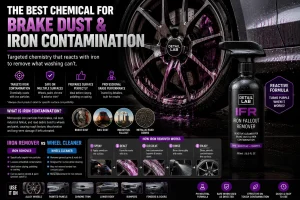
Iron remover chemically dissolves embedded metal particles, often turning purple as it reacts with brake dust on contact. It’s a gentler alternative or companion to clay bar treatment.
Spray on cool paint and wheels, then rinse thoroughly after the color-change reaction occurs. Use this before claying for the most thorough contaminant removal.
Bug & Tar Remover
Bug and tar remover breaks down stubborn organic residue that regular shampoo can’t fully dissolve. It’s a targeted, spot-treatment product rather than an all-over wash step.
Apply directly to affected areas and let it dwell before wiping gently. Treat bug splatter as soon as possible, since it becomes more acidic and harder to remove over time.
Spray Wax
Spray wax offers a quick, easy layer of shine and light protection between full detailing sessions. It’s ideal for maintaining an existing coat of wax or sealant.
Apply to a clean, dry panel and buff with a microfiber towel. Use every few weeks to extend the life of your base protection layer.
Paint Sealant
Paint sealant is a synthetic protective layer that bonds to the clear coat, offering longer-lasting protection than traditional wax. It typically lasts several months per application.
Apply to clean, clayed paint using an applicator pad, then buff off after it hazes. Sealant works well for daily drivers that need durable, low-maintenance protection.
Ceramic Coating Spray
Ceramic coating spray adds a semi-permanent layer of protection with strong hydrophobic properties, causing water to bead and roll off. It’s more durable than wax or standard sealant.
Apply to freshly clayed and decontaminated paint for proper bonding. Curing time matters, so avoid washing the car for at least 24 to 48 hours after application.
Tire Dressing
Tire dressing restores a deep black finish to tires while offering UV protection against cracking. Formulas range from matte to high-gloss finishes depending on preference.
Apply with a foam applicator after tires are clean and dry. Avoid overspray onto rotors and paint, which can cause slipping or staining.
Drying Towels
A large, plush microfiber drying towel absorbs water quickly without dragging dirt across the paint. It’s a critical final step that prevents water spots.
Blot rather than wipe when drying to minimize the risk of introducing scratches. Keep drying towels completely separate from wheel and tire towels to avoid cross-contamination.
Do You Need Separate Kits or a Complete Car Detailing Kit?
Separate interior and exterior kits give you flexibility to buy exactly what you need and upgrade individual products over time. This approach suits detailers who already own some supplies or have specific brand preferences for certain steps.
A complete car detailing kit bundles interior and exterior essentials together, often at a better combined price than buying items individually. This option suits first-time buyers who want a straightforward starting point without researching each product separately.
For overall value, a complete kit usually wins for beginners, since it covers both maintenance needs in one purchase. Experienced DIYers and professional detailers often prefer separate kits so they can fine-tune each product to their specific technique and vehicle type.
How to Choose the Right Kit for Your Vehicle
Daily drivers benefit most from a balanced kit that handles regular cabin cleanup and basic paint maintenance without requiring hours of work each week.
Luxury vehicles need premium interior products, especially leather conditioner and UV protectant, alongside exterior sealant or ceramic coating to preserve resale value.
Family cars should prioritize a strong interior kit with fabric cleaner, odor eliminator, and a capable vacuum to manage spills, crumbs, and everyday messes.
SUVs and trucks often need larger volumes of exterior products and stiffer wheel brushes to handle bigger tires and heavier off-road or highway grime.
Commercial vehicles benefit from durable, fast-acting interior cleaners and exterior shampoo suited for frequent, efficient washes rather than show-level detailing.
Show cars call for the full exterior lineup, including clay bar, iron remover, and ceramic coating, paired with a gentle, thorough interior kit for a flawless finish inside and out.
When buying, match the kit to your vehicle size, climate, and how often you plan to detail. A convertible in a sunny climate needs stronger UV protection than a garage-kept sedan in a mild region.
Step-by-Step Interior and Exterior Detailing Routine
Interior Detailing Process
- Remove trash and personal items from the cabin.
- Vacuum seats, carpets, and floor mats thoroughly.
- Clean the dashboard with a dedicated dashboard cleaner.
- Clean seats using fabric or leather cleaner as appropriate.
- Treat carpets with carpet cleaner for deeper stains.
- Clean interior glass with a streak-free, ammonia-free cleaner.
- Apply protectant to trim and dashboard surfaces to guard against UV damage.
Exterior Detailing Process
- Pre-rinse the entire vehicle to remove loose dirt.
- Apply foam wash and let it dwell before rinsing.
- Clean wheels and tires separately before washing the body.
- Hand wash using the two-bucket method with a quality wash mitt.
- Dry with a plush microfiber towel using a blotting motion.
- Use a clay bar to remove embedded contaminants.
- Apply wax, sealant, or ceramic coating for protection.
- Finish with tire dressing for a clean, uniform look.
Common Mistakes to Avoid
Using exterior chemicals inside the cabin can cause skin irritation and damage sensitive interior materials that aren’t built to handle stronger outdoor formulas.
Household cleaners like glass cleaner with ammonia or all-purpose kitchen sprays can dull trim, damage tinted windows, or strip protective coatings.
Using the same towels for interior and exterior work spreads grit from outdoor cleaning onto interior surfaces, causing fine scratches on plastic and glass.
Skipping paint protection after washing leaves the clear coat exposed to UV rays and contaminants, accelerating fading and oxidation.
Ignoring leather care until cracks appear is a costly mistake, since conditioning prevents damage that’s difficult and expensive to reverse.
Applying products in direct sunlight causes chemicals to dry too fast, leading to streaking, hazing, and uneven results on both interior and exterior surfaces.
Frequently Asked Questions
What is an interior car detailing kit?
It’s a set of tools and cleaners designed to clean and protect cabin surfaces like seats, dashboards, carpets, and interior glass.
What is included in an exterior detailing kit?
It typically includes car shampoo, a wash mitt, wheel cleaner, clay bar, and a protection product like wax, sealant, or ceramic coating.
Can one kit clean both the interior and exterior?
A complete car detailing kit combines both sets of products, though dedicated separate kits often perform better for specific surfaces.
Which detailing kit should beginners buy?
Beginners generally do best starting with a complete kit that covers basic interior and exterior needs in one straightforward package.
How often should I detail my car’s interior?
Most vehicles benefit from interior detailing every one to two weeks, depending on daily use, passengers, and pets.
How often should I protect my car’s paint?
Wax needs reapplication every four to six weeks, sealant lasts a few months, and ceramic coatings can last a year or longer.
Is ceramic coating part of an exterior detailing kit?
Ceramic coating spray is often included in advanced exterior kits as a longer-lasting alternative to traditional wax.
Do I need a foam cannon for basic washing?
A foam cannon isn’t required but significantly reduces the risk of scratching by loosening dirt before hand contact.
Can I use the same brush on wheels and interior vents?
No, wheel brushes contact brake dust and grit that can scratch delicate interior surfaces, so keep them completely separate.
Why does my leather feel stiff after cleaning?
Skipping conditioner after cleaning removes natural oils, so always follow leather cleaner with a quality conditioner.
How long does a full interior and exterior detail take?
A thorough detail covering both areas typically takes two to four hours, depending on vehicle size and condition.
Is clay bar necessary before waxing?
Yes, clay bar removes embedded contaminants that would otherwise trap dirt beneath your wax or sealant layer.
Conclusion
Interior and exterior detailing kits solve two very different problems. Interior kits keep the cabin clean, comfortable, and free of odors, while exterior kits protect and enhance the paint, wheels, and tires against daily wear.
Choose a dedicated interior kit if your cabin sees heavy daily use from kids, pets, or commuting. Choose an exterior kit if your priority is a glossy finish and long-term paint protection. If you’re starting from scratch, a complete car detailing kit offers the most practical, budget-friendly entry point.
Whichever path fits your routine, investing in high-quality detailing products pays off through a vehicle that looks better, lasts longer, and holds its value. Explore DetailLab’s range of interior and exterior detailing kits to find the right match for your car and your care routine.
Pro Tips Box
- Always clean wheels before washing the body to avoid splashing dirty water onto clean paint.
- Keep interior and exterior microfiber towels completely separate to prevent scratches.
- Work in the shade to stop cleaning products from drying too fast and streaking.
- Apply leather conditioner every one to two months to prevent cracking.
- Clay bar your paint before every wax, sealant, or ceramic coating application.
Complete Product Checklist
Interior: Interior cleaner, dashboard cleaner, leather cleaner and conditioner, fabric and upholstery cleaner, carpet cleaner, glass cleaner, detailing brushes, microfiber towels, vacuum cleaner, odor eliminator.
Exterior: Car shampoo, foam cannon, wash mitt, two buckets with grit guard, wheel cleaner, wheel brush, clay bar, iron remover, bug and tar remover, spray wax, paint sealant, ceramic coating spray, tire dressing, drying towels.
Vehicle Recommendation Table
| Vehicle Type | Recommended Kit Focus |
| Daily Driver | Balanced interior + basic exterior maintenance kit |
| Luxury Vehicle | Premium leather care + sealant or ceramic coating |
| Family Car | Strong interior kit: fabric cleaner, odor eliminator, vacuum |
| SUV / Truck | Heavy-duty exterior kit with larger wheel brushes |
| Commercial Vehicle | Fast, durable interior and exterior basics |
| Show Car | Full exterior kit with clay bar, iron remover, ceramic coating |