
Anyone can grab a sponge and a bottle of soap. Building a true professional car detailing kit is a different job entirely, one that requires the right tools, the right chemicals, and a workflow that delivers consistent results on every vehicle.
Professional detailers invest in specialized detailing equipment because consumer-grade products simply can’t keep up with daily use, varied paint conditions, or client expectations. A dual-action polisher, a pH-neutral shampoo, and a proper paint thickness gauge aren’t luxuries; they’re the tools that separate a rushed wash from a genuine detail.
In this checklist, you’ll learn exactly what belongs in a professional setup, from washing gear to paint correction equipment to safety accessories. Whether you’re starting a mobile detailing business or upgrading your home setup, this guide will help you build a kit that performs like the pros.
Looking to build the perfect detailing setup? Explore our Car Detailing Kit Guide to learn how to choose the right tools, cleaning products, and accessories for every stage of vehicle care. Whether you’re a beginner or a professional detailer, this complete guide will help you create an effective kit for cleaning, protecting, and maintaining your car with confidence.
What Is a Professional Car Detailing Kit?
A professional car detailing kit is a complete set of high-grade tools, machines, and chemicals used to wash, decontaminate, correct, and protect a vehicle to a commercial standard. It goes far beyond a basic wash-and-wax setup.
The purpose of this kit is consistency. Professionals need equipment that performs the same way on the tenth car of the day as it did on the first, without shortcuts or compromised results.
Professional kits differ from consumer kits in build quality, chemical concentration, and machine power. A rotary polisher, for example, offers far more paint-correction capability than a handheld consumer buffer ever could.
This kit suits detailing shop owners, mobile detailing businesses, and serious enthusiasts who want showroom-level results. If you’re detailing multiple vehicles weekly or charging clients for your work, professional-grade equipment quickly pays for itself.
Why a Professional Detailing Kit Matters
Higher-quality finishes come from better tools. A dual action polisher paired with the right pad and compound removes swirl marks that a basic wax application never could.
Faster workflow matters just as much as final quality. Professional-grade pressure washers, foam cannons, and vacuums cut hours off a full detail compared to consumer equipment.
Better paint protection results from proper decontamination before any wax, sealant, or ceramic coating goes on. Skipping these steps with weaker tools leads to shorter-lasting protection.
Increased customer satisfaction comes naturally when results are consistent and long-lasting. Clients notice the difference between a rushed wash and a true professional detail.
Long-term cost savings add up over time, since durable equipment holds up to daily use far better than budget tools that need frequent replacement. Improved efficiency lets professionals take on more vehicles without sacrificing quality, directly boosting revenue.
Professional Car Detailing Kit Checklist
Washing Equipment
A pressure washer speeds up rinsing and pre-wash foam application, cutting contact time with the paint and reducing scratch risk. It’s one of the first major equipment upgrades most professionals make.
A foam cannon attaches to the pressure washer to blanket panels in thick, clinging suds that loosen dirt before any mitt touches the surface. This pre-wash step is essential for safe, swirl-free washing.
Wash buckets, used in pairs, separate soapy water from rinse water so dirt never gets reintroduced to the mitt. Grit guards sit at the bottom of each bucket, trapping debris below where the mitt can pick it back up.
Premium wash mitts made from microfiber or lambswool hold more soap and lift dirt away from the paint far more gently than sponges. Drying towels, large and plush, absorb water quickly and prevent water spots without dragging grit across the surface.
Professional Cleaning Chemicals
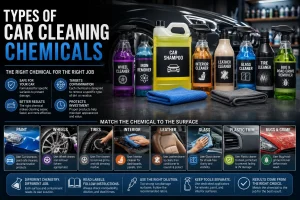
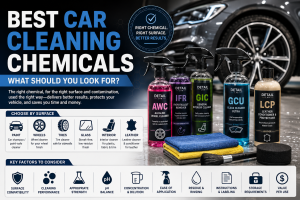
pH-neutral car shampoo cleans effectively without stripping wax, sealant, or ceramic coating from the paint. It’s the safest daily-use option for maintaining existing protection layers.
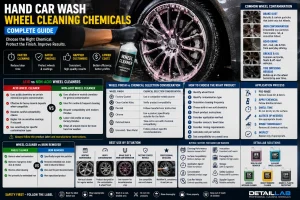
Wheel cleaner is formulated to dissolve baked-on brake dust, which is more corrosive than typical road grime. Tire cleaner handles the ground-in dirt and old dressing residue that shampoo alone can’t remove.
Interior cleaner tackles everyday dust and grime on cabin surfaces, while glass cleaner delivers a streak-free finish on windows without ammonia that could damage tint. Leather cleaner and fabric cleaner are formulated separately since each material requires a different cleaning approach.
Plastic and trim cleaner restores faded exterior trim, and engine bay cleaner safely degreases components without damaging sensitive electrical parts. An all-purpose cleaner (APC) rounds out the lineup, handling diluted general cleaning tasks across both interior and exterior surfaces.
Safety matters here: always dilute chemicals according to label instructions, work in ventilated spaces, and never mix cleaning products, since some combinations release harmful fumes.
Paint Decontamination Tools
Clay bar removes embedded contaminants like industrial fallout and rail dust that washing can’t touch, leaving paint smooth to the touch. Use it after washing and before any correction or protection step.
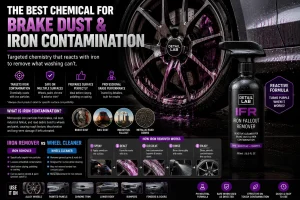
Iron remover chemically dissolves metal particles from brake dust, often turning purple as it reacts. It’s typically applied before claying to reduce the workload on the clay bar itself.
Bug remover and tar remover are targeted spot treatments for stubborn organic residue that regular shampoo leaves behind. The proper sequence is wash, iron remover, bug and tar removal, then clay bar, ensuring paint is fully decontaminated before correction begins.
Paint Correction Equipment
A dual action polisher is the go-to choice for most professionals because it’s forgiving, safe on edges, and still capable of removing light to moderate swirl marks. It’s the better starting point for detailers newer to paint correction.
A rotary polisher offers more aggressive cutting power for deeper scratches and heavier oxidation but requires more skill to avoid burning through clear coat. Many professional shops use both machines depending on the paint’s condition.
Cutting compounds remove deeper defects, while finishing polish refines the paint to a high-gloss, swirl-free finish afterward. Polishing pads come in varying levels of aggressiveness, from heavy-cutting foam to soft finishing pads.
A paint thickness gauge measures clear coat depth before correction begins, preventing detailers from removing too much material and causing permanent damage. An inspection light reveals swirl marks and defects invisible under normal shop lighting, guiding precise correction work.
Paint Protection Products
Spray wax offers a quick, light protective layer ideal for maintenance between full details. It’s fast to apply and works well as a top-up on existing protection.
Paint sealant provides a synthetic, longer-lasting protective layer than traditional wax, typically holding up for several months. It’s a reliable mid-tier option for clients wanting durable protection without the cost of ceramic coating.
Ceramic coating delivers the longest-lasting, most hydrophobic protection available, often lasting a year or more with proper care. Ceramic coating applicators, usually suede or foam pads, ensure even, streak-free application during this critical, higher-stakes step.
Interior Detailing Equipment
A commercial-grade vacuum cleaner with strong suction handles crumbs, sand, and pet hair far more efficiently than consumer models. A steam cleaner sanitizes and deep-cleans upholstery, carpets, and vents using heat alone, reducing chemical use.
Interior detailing brushes reach into vents, seams, and stitching, while detailing swabs handle tight buttons and switches. An air blower forces dust and debris out of hard-to-reach crevices that brushes and vacuums can’t fully clear.
Microfiber towels remain essential throughout the interior process, dedicated separately from exterior towels to avoid cross-contamination and scratching.
Wheel & Tire Detailing Equipment
Wheel brushes with long handles reach into spokes and barrels where dirt accumulates most heavily. Barrel brushes are designed specifically for the inner wheel barrel, a common trouble spot for baked-on brake dust.
Tire brushes with stiff bristles scrub deep tread grooves, while lug nut brushes clean the tight recesses around each lug. Tire dressing applicators ensure even, controlled application, preventing sling or overspray onto clean paint.
Essential Accessories
Spray bottles and measuring bottles keep diluted chemicals organized and properly concentrated for consistent results. Foam applicators distribute wax, sealant, and dressing evenly across surfaces.
Chemical-resistant gloves and safety glasses protect detailers from concentrated cleaners and airborne particles during correction work. A detailing apron and knee pads add comfort and protection during long sessions spent close to the vehicle.
A detailing cart keeps tools organized and mobile between vehicles, while storage organizers protect chemicals from temperature extremes and direct sunlight that can degrade their effectiveness over time.
Professional Kit vs Beginner Kit
| Category | Professional Kit | Beginner Kit |
| Equipment Quality | Commercial-grade, built for daily use | Consumer-grade, lighter duty |
| Number of Tools | 30+ specialized items | 10–15 basic items |
| Paint Correction Capability | Full correction with polishers and gauges | Minimal to none |
| Ceramic Coating Compatibility | Fully compatible with prep tools included | Limited or requires separate purchase |
| Durability | Built for hundreds of details | Suited for occasional personal use |
| Cost | Higher upfront investment | Lower upfront cost |
| Ideal User | Professionals, mobile businesses, shops | DIY owners, first-time detailers |
How to Build a Professional Detailing Kit on Different Budgets
Starter Professional Kit
A starter kit focuses on washing equipment, core chemicals, and basic interior tools: pressure washer, foam cannon, two buckets with grit guards, pH-neutral shampoo, wheel cleaner, and a solid microfiber towel supply. This foundation covers most routine details and mobile jobs.
Intermediate Professional Kit
At this stage, add a dual action polisher, polishing pads, cutting compound and finishing polish, a clay bar kit, and paint sealant. This level allows detailers to offer light paint correction and longer-lasting protection services.
Complete Professional Studio Kit
A complete setup includes a rotary polisher alongside the dual action machine, a paint thickness gauge, inspection lighting, ceramic coating products, a steam cleaner, and a fully stocked detailing cart. This tier supports high-end services like full paint correction and ceramic coating installation.
Invest first in washing equipment and chemicals, since every job requires them. Add correction and protection tools as client demand grows to avoid overspending on equipment that sits unused.
How to Maintain Professional Detailing Equipment
Clean microfiber towels after every use in a dedicated wash cycle without fabric softener, which reduces absorbency. Separate towels by task, interior, exterior, and glass, to prevent cross-contamination.
Wash brushes thoroughly after each job, rinsing out embedded dirt and brake dust before bristles dry stiff. Maintain polishers by cleaning pad backing plates regularly and checking cords and housings for wear.
Store chemicals in a cool, dark space away from direct sunlight and temperature swings that can break down active ingredients. Replace worn accessories like matted pads, frayed mitts, and cracked applicator foam promptly to maintain consistent results.
Set a regular equipment inspection schedule, checking polisher pads, hoses, and brush bristles monthly to catch wear before it affects your work quality.
Common Mistakes Professionals Should Avoid
Using dirty microfiber towels reintroduces grit onto clean paint, causing the exact scratches a proper wash routine is meant to prevent.
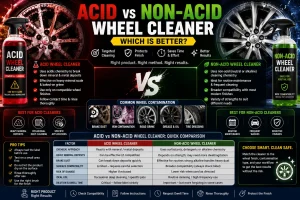
Mixing incompatible chemicals, especially acidic wheel cleaners with other products, can create hazardous reactions and damage surfaces.
Poor chemical storage in direct sunlight or extreme heat shortens product lifespan and reduces effectiveness over time.
Cross-contamination between interior and exterior tools spreads brake dust and grit onto delicate cabin surfaces, causing avoidable damage.
Ignoring equipment maintenance leads to premature tool failure and inconsistent results that can affect client trust and repeat business.
Overusing compounds during paint correction removes more clear coat than necessary, shortening the paint’s long-term lifespan. Incorrect polishing techniques, like using the wrong pad-and-compound combination or applying too much pressure, can create new defects instead of removing old ones.
Frequently Asked Questions
What should a professional car detailing kit include?
It should include washing equipment, cleaning chemicals, decontamination tools, correction equipment, protection products, interior tools, and safety accessories.
Which professional detailing tools are essential?
A pressure washer, foam cannon, dual action polisher, clay bar, and pH-neutral shampoo are among the most essential starting tools.
What detailing equipment is needed to start a business?
A starter kit with washing gear, core chemicals, a polisher, and basic interior tools is enough to begin taking on client vehicles.
Is a dual action polisher better than a rotary polisher?
A dual action polisher is safer and more forgiving for most correction work, while a rotary polisher offers more aggressive cutting power for experienced users.
How much does a professional detailing setup cost?
Costs vary widely by tier, with starter kits costing far less than a complete studio setup that includes multiple polishers and ceramic coating equipment.
How often should detailing tools be replaced?
Towels, mitts, and pads should be replaced when visibly worn, typically every few months with regular professional use.
Which products are best for ceramic coating preparation?
Iron remover, clay bar, and a finishing polish create the clean, smooth surface ceramic coating needs to bond properly.
Do I need both a dual action and a rotary polisher?
Many professionals eventually use both, relying on the dual action machine for routine work and the rotary for heavier correction jobs.
What’s the difference between wax, sealant, and ceramic coating?
Wax offers short-term shine, sealant provides mid-term synthetic protection, and ceramic coating delivers the longest-lasting, most durable protective layer.
Is a steam cleaner necessary for interior detailing?
It’s not required but significantly improves sanitization and deep cleaning of upholstery and carpets without heavy chemical use.
How do I prevent cross-contamination between tools?
Keep separate, clearly labeled towels, brushes, and buckets for interior, exterior, and wheel tasks at all times.
What safety gear should professional detailers wear?
Chemical-resistant gloves and safety glasses protect against concentrated cleaners, while an apron and knee pads add comfort during long sessions.
Conclusion
A professional car detailing kit is an investment in consistency, speed, and results that consumer-grade tools simply can’t match. From washing equipment to paint correction machines to proper storage and safety gear, every item on this checklist plays a role in delivering premium, repeatable outcomes.
Whether you’re building a starter setup or a complete professional studio, prioritize quality where it matters most: washing, decontamination, and protection. A well-built kit pays for itself through faster workflows, happier clients, and paint that stays protected for the long haul.
Key Takeaways Box
- A professional detailing kit includes washing, chemical, decontamination, correction, protection, interior, wheel, and safety categories.
- Dual action polishers are safer for most correction work; rotary polishers offer more aggressive cutting power.
- Always decontaminate paint with iron remover and clay bar before applying any protection product.
- Build your kit in stages: washing and chemicals first, correction and protection tools as demand grows.
- Regular maintenance of towels, brushes, and polishers directly affects the consistency of your results.
Pro Tips Box
- Always use the two-bucket method with grit guards to prevent swirl marks during washing.
- Check paint thickness before correction work to avoid removing too much clear coat.
- Store chemicals away from sunlight and temperature extremes to preserve their effectiveness.
- Dedicate separate towels and brushes to interior, exterior, and wheel tasks.
- Inspect polishing pads and brushes monthly to catch wear before it affects your work.
Professional Detailing Kit Checklist (Printable)
Washing: Pressure washer, foam cannon, two buckets, grit guards, premium wash mitt, drying towels.
Chemicals: pH-neutral shampoo, wheel cleaner, tire cleaner, interior cleaner, glass cleaner, leather cleaner, fabric cleaner, plastic/trim cleaner, engine bay cleaner, APC.
Decontamination: Clay bar, iron remover, bug remover, tar remover.
Correction: Dual action polisher, rotary polisher, cutting compound, finishing polish, polishing pads, paint thickness gauge, inspection light.
Protection: Spray wax, paint sealant, ceramic coating, ceramic coating applicators.
Interior: Vacuum cleaner, steam cleaner, detailing brushes, detailing swabs, air blower, microfiber towels.
Wheels & Tires: Wheel brushes, barrel brushes, tire brushes, lug nut brushes, tire dressing applicators.
Accessories: Spray bottles, measuring bottles, foam applicators, chemical-resistant gloves, safety glasses, apron, knee pads, detailing cart, storage organizers.
Professional vs Beginner Kit Comparison Table
| Feature | Professional Kit | Beginner Kit |
| Equipment Quality | Commercial-grade | Consumer-grade |
| Tool Count | 30+ items | 10–15 items |
| Paint Correction | Full capability | Minimal to none |
| Ceramic Coating Ready | Yes | Limited |
| Durability | High, built for daily use | Moderate, occasional use |
| Cost | Higher investment | Lower investment |
| Best For | Professionals, businesses | DIY, first-time owners |
Equipment Maintenance Checklist
- Wash microfiber towels after every use without fabric softener.
- Rinse and dry brushes thoroughly after each job.
- Clean polisher backing plates and inspect cords regularly.
- Store chemicals in a cool, dark location.
- Replace matted pads, frayed mitts, and cracked applicators promptly.
- Conduct a monthly inspection of pads, hoses, and bristles.
Budget Planning Table
| Tier | Core Additions | Best For |
| Starter | Pressure washer, foam cannon, buckets, shampoo, wheel cleaner, towels | New mobile detailers, DIY upgrades |
| Intermediate | Dual action polisher, pads, compound, polish, clay bar, sealant | Growing detailing businesses |
| Complete Studio | Rotary polisher, paint thickness gauge, inspection light, ceramic coating, steam cleaner | Established shops, full-service studios |