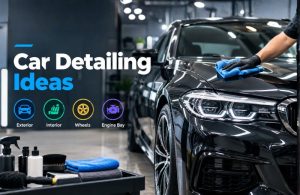

If you’re ready to buy a car detailing kit, the smartest first step isn’t browsing for the biggest bundle available; it’s figuring out what your vehicle, skill level, and detailing goals actually require. The right kit should match your vehicle type, experience, budget, and how often you plan to detail.
A bigger kit isn’t automatically a better one. Many buyers end up with products they never use, while missing a few essentials that would have made a real difference. This guide walks through exactly how to choose the right detailing products in 2026, so your money goes toward what actually improves your results.The Car Detailing Kit Guide explains the essential tools, products, and techniques needed to clean, protect, and maintain your vehicle, helping beginners and enthusiasts choose the right detailing setup.
What Is a Car Detailing Kit?
A car detailing kit is a bundled set of cleaning and maintenance products, usually covering washing, drying, and basic surface care. A basic kit typically includes shampoo, a wash mitt, and towels, while a complete kit adds interior cleaners, wheel products, and sometimes protection products like wax or sealant.
Kits offer convenience because they bundle compatible products together, saving buyers from researching each item individually. For a fuller breakdown of what these kits typically contain, this site’s dedicated guide on what a car detailing kit is covers that ground in more depth.
What Should You Consider Before You Buy a Car Detailing Kit?
1. Your Experience Level
Beginners generally need fewer, simpler products and benefit from kits that emphasize ease of use. Enthusiasts often want a wider product range to experiment with different techniques and finishes. Professionals typically require commercial-grade tools built for repeated, high-volume use. Matching the kit to your actual skill level prevents overspending on equipment you’re not ready to use safely.
2. Your Vehicle Type
A sedan or daily driver usually needs straightforward washing and interior products. SUVs and trucks may require larger towels, more shampoo per wash, and stronger wheel cleaners due to increased size and road grime exposure. Luxury and performance vehicles often call for gentler chemicals and more careful paint care, since their finishes can be more sensitive to aggressive products.
3. How Often You Detail Your Car
Frequent detailing justifies investing in better tools and larger product quantities, since consumables run out faster and equipment sees more wear. Occasional detailers can typically get by with smaller quantities and simpler tools without sacrificing results.
4. Interior vs Exterior Needs
Some kits focus almost entirely on exterior washing, which suits buyers mainly concerned with paint and wheels. Others include a fuller mix of interior products like fabric or leather cleaner. Deciding which areas matter most to you narrows the field considerably.
5. Your Budget
Setting a budget works best when you prioritize essential products first shampoo, a wash mitt, towels, and basic wheel care before adding optional extras like ceramic spray or a foam cannon. This keeps spending focused on what actually affects your results.
6. Your Available Space
Chemicals, towels, buckets, and any pressure washing equipment all need storage. A small apartment or shared garage may limit how much bulk equipment makes sense, while a dedicated garage space allows for a larger, more complete setup.
7. Your Detailing Goals
Basic cleaning calls for shampoo and simple tools. Maintenance detailing adds regular protection products. Deep cleaning covers both interior and exterior thoroughly. Paint decontamination introduces clay bars and iron removers, while paint correction and paint protection require polishers, compounds, and sealants or coatings tools that go well beyond a standard starter kit.
Essential Detailing Products Every Good Kit Should Have
Car Shampoo
Look for a pH-balanced automotive shampoo that lifts dirt without stripping existing wax, sealant, or coating.
Wash Mitt
A dedicated microfiber or lambswool wash mitt is gentler on paint than sponges or household cloths, which can trap grit and cause fine scratches.
Microfiber Towels
Good detailing kits include multiple towel types. GSM (grams per square meter) indicates thickness and absorbency, towel size affects coverage, and edge design (edged vs edgeless) affects the risk of scratching delicate surfaces. Surface-specific towels for glass, paint, or interior help keep each towel doing one job well.
Buckets & Grit Guards
Two buckets, one for wash water and one for rinsing, paired with a grit guard at the bottom, help keep dirt and grit from being reintroduced to the wash mitt during washing.
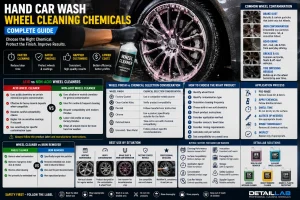
Wheel Cleaner & Wheel Brushes
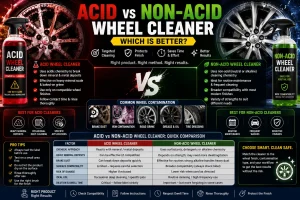
Wheel products should be chosen based on wheel finish (painted, clear-coated, or bare metal) and the type of contamination present, since some cleaners are too aggressive for certain finishes.
Interior Cleaner
Check surface compatibility carefully. A cleaner safe for hard plastic isn’t always safe for leather or fabric, so multi-surface claims are worth verifying against your interior materials.
Glass Cleaner
A good automotive glass cleaner leaves a streak-free finish and is safe for tinted windows, which not all household glass cleaners guarantee.
Detailing Brushes
Small brushes reach vents, trim, emblems, and wheel spokes areas towels and mitts can’t clean effectively on their own.
Drying Towel
A large, absorbent drying towel removes water safely after washing. Proper drying technique reduces the risk of water spots and swirl marks, making this a genuinely important step rather than an afterthought.
Optional Detailing Products Worth Considering
Not every buyer needs every product. These items are useful in specific situations rather than universally necessary:
- Foam Cannon — speeds up pre-wash foaming, useful for those who wash frequently or want a gentler wash stage
- Pressure Washer — helpful for faster rinsing, especially with heavier dirt or mud
- Clay Bar — removes embedded contaminants; useful periodically rather than every wash
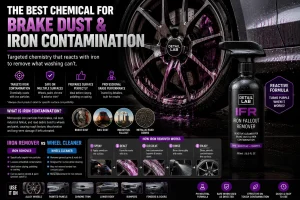
- Iron Remover — targets brake dust and ferrous particles bonded to paint or wheels
- Bug & Tar Remover — helpful for vehicles that see highway driving or seasonal buildup
- Spray Wax — a quick, low-effort way to refresh shine between full detailing sessions
- Paint Sealant — adds longer-lasting protection than spray wax alone
- Ceramic Spray — offers added protection and easier maintenance for those willing to learn proper application
- Tire Dressing — a cosmetic finishing touch rather than a functional necessity
- Leather Cleaner & Conditioner — only relevant for vehicles with leather interiors
- Vacuum Cleaner — valuable for thorough interior cleaning, especially for pet owners or frequent drivers
Best Auto Detailing Kit by User Type
| User | Recommended Kit Type | Essential Products | Optional Upgrades |
| Beginner | Basic starter kit | Shampoo, wash mitt, buckets, towels | Spray wax, tire dressing |
| DIY enthusiast | Mid-range kit | Full wash kit plus interior and glass products | Clay bar, foam cannon |
| Luxury car owner | Mid-range kit with gentle chemicals | pH-balanced shampoo, soft towels, gentle wheel cleaner | Ceramic spray, paint sealant |
| Daily driver owner | Basic to mid-range kit | Shampoo, mitt, wheel cleaner, interior cleaner | Vacuum cleaner, spray wax |
| Mobile detailer | Professional-level kit | Pressure washer, foam cannon, multiple towel types | Polisher, decontamination products |
| Professional detailer | Professional-level kit | Full wash system, correction tools, protection products | Rotary polisher, advanced coatings |
Beginners and daily driver owners generally get the most value from focused, essential-only kits, since their routines rarely demand advanced correction tools. Enthusiasts and luxury owners benefit from a slightly wider product range that supports more careful paint care. Mobile and professional detailers need equipment built for volume and consistency, which usually means investing in a professional-level setup from the start.
Best Auto Detailing Kit by Budget Level
Basic Starter Kit
Focuses on essential cleaning and maintenance: shampoo, a wash mitt, buckets, and microfiber towels. This level suits beginners and buyers who detail occasionally.
Mid-Range Detailing Kit
Builds on the basics by adding decontamination products like a clay bar, along with protection products such as spray wax or a sealant. This level suits enthusiasts and buyers who detail regularly.
Professional-Level Kit
Adds advanced equipment for frequent detailing, paint correction, and professional workflow items like polishers, pressure washers, and a wider range of specialized chemicals. This level suits professional detailers and mobile detailing businesses.
Exact pricing varies by brand and region, so it’s best to compare current listings directly rather than relying on fixed figures.
All-in-One Kit vs Buying Individual Detailing Products
| Factor | All-in-One Kit | Individual Products |
| Convenience | Very convenient, single purchase | Requires more research and separate purchases |
| Product selection | Limited to what’s bundled | Full control over every product chosen |
| Customization | Low | High |
| Initial cost | Often lower upfront | Can be higher if buying premium items individually |
| Product quality | Varies by bundle | Can be selected item by item for quality |
| Beginner friendliness | High | Lower, requires more knowledge |
| Professional use | Limited fit for advanced needs | Better suited to specific professional requirements |
| Long-term value | Good for light, general use | Good for buyers with specific, evolving needs |
An all-in-one kit makes sense for beginners or anyone who wants a straightforward, ready-to-use starting point. Buying individual products makes more sense once you know exactly which products work for your vehicle and routine, or when your needs go beyond what a general kit covers.
How to Evaluate Detailing Product Quality
Before buying, check the product’s stated purpose and confirm it matches your intended use. Review surface compatibility, dilution requirements, and application method so the product fits your workflow. Read the instructions and any safety information provided by the manufacturer.
Product concentration affects how far a bottle will actually go, while packaging and storage requirements matter for maintaining shelf life. Manufacturer information and customer feedback, where genuinely available, can add useful context. A higher price does not automatically mean higher quality; it’s worth judging products against your actual needs rather than cost alone.
How to Choose Microfiber Towels for a Detailing Kit
Microfiber towels are one of the most important parts of any detailing setup, since they directly touch the paint and other surfaces. GSM indicates towel thickness and absorbency; higher GSM towels are generally more plush and absorbent. Pile length affects softness and how much material contacts the surface.
Edgeless towels reduce the risk of scratching from stitched borders, making them a safer choice for paint. Drying towels, glass towels, interior towels, paint polishing towels, and wheel towels each serve a distinct purpose. Using dedicated towels for each surface rather than one towel for everything helps reduce cross-contamination, which is one of the easiest ways to avoid introducing scratches or swirl marks.
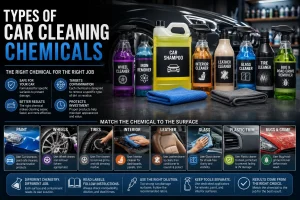
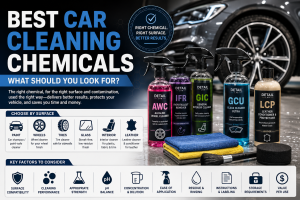
How to Choose Car Detailing Chemicals
When evaluating chemicals, check the pH level relative to the surface you’re treating, since acidic or alkaline products can be too aggressive for certain finishes. Review dilution ratios and confirm surface compatibility before use.
Concentration affects both value and strength, so a highly concentrated product may need more careful dilution. Consider the intended application (spray, foam, or direct contact) and match cleaning strength to the actual level of contamination. Always follow safety instructions. Using the strongest chemical available isn’t always the best approach; overly aggressive products can damage sensitive surfaces or strip existing protection unnecessarily.
Should Beginners Buy Professional Detailing Products?
Not usually, at least not right away. Professional products make sense once a buyer has mastered basic technique and understands how to use stronger chemicals or powered tools safely. Basic products are enough for most beginners working through routine washing and maintenance.
Technique matters more than product strength in the early stages, and advanced chemicals can require more knowledge to use correctly without causing damage. Beginners can upgrade gradually, adding one professional-level product at a time as their skills grow, a progression covered in more detail in this site’s Professional vs DIY Car Detailing Kits guide.
What Detailing Products Should You NOT Buy Yet?
Some products are best postponed until you have more experience:
- Rotary polishers — powerful but unforgiving; better suited to users comfortable with paint correction
- Advanced paint correction compounds — require technique to use without causing damage
- Paint thickness gauges — mainly useful once you’re doing serious correction work
- Professional coating equipment — typically unnecessary until you’re applying coatings regularly
- Large chemical collections — often lead to waste and expired products before they’re ever used
- Specialized restoration tools — valuable for advanced or damaged paint, not routine maintenance
These become useful once you’re detailing frequently, working on more demanding paint conditions, or offering detailing as a service.
2026 Car Detailing Kit Buying Checklist
- Identify your vehicle type
- Decide whether you need interior, exterior, or both
- Set your budget
- Choose essential products first
- Check surface compatibility
- Check dilution instructions
- Compare product quantities
- Choose appropriate microfiber towels
- Separate wheel and paint tools
- Consider storage requirements
- Check safety instructions
- Avoid unnecessary products
- Plan future upgrades
10 Questions to Ask Before You Buy
- What surfaces will I clean? This determines which products and tools you actually need.
- How often will I detail my vehicle? Frequency affects how much quantity and durability matter.
- Am I a beginner or experienced detailer? Your skill level should guide product complexity.
- Do I need interior products? Not every buyer prioritizes interior care equally.
- Do I need paint protection? This affects whether sealants or coatings belong in your kit.
- Do I need decontamination products? Clay bars and iron removers aren’t necessary for every wash.
- Do I already own some detailing tools? Avoid duplicating what you already have.
- Can I store the products properly? Storage space affects how much you can reasonably buy.
- Are the chemicals suitable for my vehicle? Confirm compatibility with your paint, wheels, and interior materials.
- Can I upgrade the kit later? Favor a setup that allows gradual additions over time.
Common Car Detailing Kit Buying Mistakes
Buying the Biggest Kit Instead of the Right Kit — Focus on what matches your actual routine rather than the largest available bundle.
Buying Too Many Chemicals — Start with essentials and add products as specific needs arise.
Ignoring Microfiber Quality — Prioritize good towels early, since they directly affect paint safety.
Choosing Products Without Checking Compatibility — Always confirm a product suits your specific surfaces before applying it.
Buying Professional Equipment Too Early — Build technique with basic tools before introducing powered equipment.
Choosing Only by Price — Balance cost against actual suitability for your vehicle and goals.
Ignoring Product Instructions — Dilution and application instructions exist to protect both results and surfaces.
Buying Duplicate Products — Check your current supplies before adding more of the same type.
Forgetting Storage Requirements — Make sure you have adequate space before expanding your collection.
Not Considering Your Actual Detailing Routine — Buy based on how you really detail, not how you imagine you might.
How to Build a Detailing Kit That Grows With You
Stage 1 — Basic Cleaning Focus on washing and routine maintenance: shampoo, a wash mitt, buckets, and towels.
Stage 2 — Advanced Maintenance Add decontamination products like a clay bar, along with better protection such as sealant or spray wax.
Stage 3 — Professional-Level Detailing Add paint correction tools and advanced equipment once you’re comfortable with technique and ready for more demanding work.
Buyers can build their setup gradually, adding new products as skills and needs develop, rather than purchasing everything at once.
How to Buy Detailing Products Online Safely
Verify the exact product name and specifications before purchasing to avoid confusion with similarly named items. Check the manufacturer’s instructions to confirm the product suits your intended use. Confirm product size and quantity, since listings can be unclear about volume.
Check seller authenticity where possible, and look for proper, intact packaging in product photos. Avoid suspiciously vague listings that lack clear details, and compare product descriptions carefully across sellers before deciding.
Frequently Asked Questions
How do I buy a car detailing kit?
Start by identifying your vehicle type, experience level, and budget, then prioritize essential products before considering optional upgrades.
What is the best auto detailing kit?
The best kit depends on your specific needs vehicle type, experience, and how often you detail rather than any single universal option.
What should a car detailing kit include?
At minimum, shampoo, a wash mitt, buckets, microfiber towels, wheel cleaner, and an interior cleaner.
How much should I spend on a detailing kit?
Spending should reflect your actual detailing frequency and goals, prioritizing essentials before optional extras.
Is an all-in-one detailing kit worth it?
It’s often worth it for beginners who want convenience, though experienced users may prefer selecting individual products.
What detailing products do beginners need?
Shampoo, a wash mitt, buckets with a grit guard, microfiber towels, and basic wheel and interior cleaners.
Are professional detailing products worth buying?
They’re worth it once you detail frequently or need advanced results like paint correction, but not necessary for basic maintenance.
What is the best detailing kit for DIY car cleaning?
A mid-range kit that covers washing, interior cleaning, and basic protection usually suits most DIY users well.
How do I choose car detailing products?
Check surface compatibility, dilution requirements, and intended application before comparing products by price.
Should I buy detailing products individually or as a kit?
Kits suit beginners seeking convenience, while individual products suit buyers with specific or advanced needs.
What are the most important detailing tools?
A wash mitt, quality microfiber towels, and buckets with a grit guard form the foundation of most kits.
What should I avoid when buying a detailing kit?
Avoid oversized kits with unnecessary products, unclear chemical instructions, and professional tools before you’re ready to use them.
Conclusion
Choosing the right car detailing kit in 2026 comes down to buying according to your actual needs rather than chasing the largest or most expensive bundle. Prioritize essential products first, choose chemicals suited to your specific surfaces, and invest in quality microfiber towels and basic tools before anything else.
From there, upgrade gradually as your skills and detailing goals grow. A thoughtfully chosen starter kit will often serve you better than an oversized bundle full of products you may never use and when you’re ready to expand, DetailLab’s range of detailing products can help you build out your setup one step at a time.