
Choosing a professional car detailing kit or a simpler DIY setup is one of the most common questions car owners face once they get serious about keeping their vehicle looking sharp. Both options can deliver a clean, protected car, but they are built for different people, different budgets, and different goals.
The right choice depends on your experience level, how often you detail, the condition of your vehicle, your budget, the space you have to work in, the results you want, and the type of detailing work you plan to do. A weekend car owner washing a daily driver has very different needs than a mobile detailer servicing five vehicles a day.
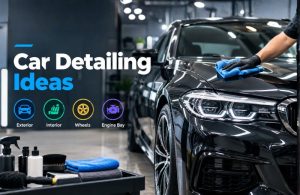
The Car Detailing Kit Guide explains the essential tools, products, and techniques needed to clean, protect, and maintain your vehicle, helping beginners and enthusiasts choose the right detailing setup.
What Is a DIY Car Detailing Kit?
A DIY car detailing kit is a curated set of basic tools and cleaning products designed for everyday car owners who want to wash, clean, and maintain their vehicle at home. These kits typically focus on routine upkeep rather than advanced paint work.
Typical products include car shampoo, wheel cleaner, interior cleaner, and glass cleaner. Typical tools include a wash mitt, microfiber towels, detailing brushes, and buckets.
Intended users are everyday vehicle owners, beginners, and people who detail their own car occasionally rather than as a business.
Advantages of a DIY kit include affordability, simplicity, and a manageable learning curve. Everything is designed to be beginner-friendly, so mistakes are less costly.
Limitations show up when the vehicle needs more than surface cleaning. A DIY kit usually focuses on simple cleaning and maintenance rather than advanced correction work, because it lacks the machinery and specialized chemicals needed for tasks like paint correction or heavy decontamination.
What Is a Professional Car Detailing Kit?
A professional car detailing kit is a more extensive, higher-capacity set of equipment and chemicals built for detailers who work on multiple vehicles, tackle advanced paint issues, or run a detailing business.
This includes professional-grade equipment such as pressure washers and foam cannons, advanced tools like dual action or rotary polishers, and specialized chemicals for decontamination, paint correction, and paint protection.
Intended users are professional detailers, mobile detailing businesses, and experienced enthusiasts who want business-level results.
Advantages include faster workflows, the ability to correct paint defects, and equipment built to handle repeated use across many vehicles.
Limitations include a higher upfront investment, a steeper learning curve, and the need for more storage and maintenance. Professional detailers often need equipment that can handle repeated vehicle work and more complex detailing jobs, which is why the tools are built differently from consumer-grade options.
Professional vs DIY Car Detailing Kits: Key Differences
| Factor | DIY Kit | Professional Kit |
| Target user | Everyday car owners, beginners | Professional detailers, businesses |
| Cost | Lower upfront cost | Higher upfront investment |
| Product range | Basic, focused essentials | Broad, specialized product range |
| Tool quality | Consumer-grade | Commercial-grade, built for repeat use |
| Equipment | Manual tools, hand application | Powered equipment (polishers, pressure washers) |
| Skill level | Beginner-friendly | Requires training and technique |
| Time efficiency | Slower, manual process | Faster, streamlined workflow |
| Paint correction | Limited to none | Fully equipped for correction |
| Ceramic coating | Possible with consumer products | Often includes professional-grade coatings |
| Interior detailing | Basic cleaning | Deep cleaning with specialized tools |
| Vehicle volume | One vehicle at a time, occasional use | Built for multiple vehicles, frequent use |
| Long-term value | Strong value for light, occasional use | Strong value for frequent or business use |
The biggest differences come down to volume and complexity. A DIY kit is built around occasional care for one vehicle. A professional kit is built around consistent, repeatable results across many vehicles, often under time pressure. Tool quality and equipment also separate the two: professional gear is engineered for durability under constant use, while DIY tools are designed for occasional handling.
What Does a DIY Car Detailing Kit Usually Include?
Car Shampoo
A pH-balanced car shampoo lifts dirt and grime without stripping wax or sealant, forming the foundation of any wash step.
Wash Mitt
A soft wash mitt, usually microfiber or lambswool, holds soapy water against the paint while minimizing swirl marks during hand washing.
Buckets & Grit Guard
The two-bucket method — one for soapy water, one for rinsing — paired with a grit guard, helps keep dirt and grit away from the wash mitt.
Microfiber Towels
Multi-purpose microfiber towels are used for wiping, buffing, and general cleanup throughout the DIY workflow.
Wheel Cleaner
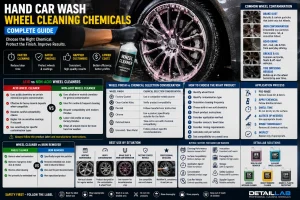
A dedicated wheel cleaner breaks down brake dust and road grime, which is tougher and more abrasive than dirt on painted surfaces.
Wheel Brush
A soft-bristle wheel brush reaches into spokes and lug areas that a wash mitt cannot access safely.
Interior Cleaner
An all-purpose interior cleaner handles dashboards, door panels, and other interior surfaces without damaging trim or upholstery.
Glass Cleaner
A streak-free glass cleaner keeps windows and mirrors clear, supporting both appearance and visibility.
Detailing Brushes
Small detailing brushes clean vents, crevices, and tight interior spaces that towels cannot reach.
Drying Towels
A large, absorbent drying towel removes water quickly after washing, reducing the chance of water spots.
Tire Dressing
Tire dressing adds a clean, finished look to tires and helps protect rubber from UV exposure.
What Does a Professional Car Detailing Kit Usually Include?
Pressure Washer
A pressure washer speeds up the pre-rinse and rinse stages, removing loose dirt more efficiently than a garden hose.
Foam Cannon
A foam cannon applies a thick layer of cleaning foam that helps lift dirt before contact washing, reducing the risk of scratching paint.
Professional Wash Equipment
This includes higher-capacity buckets, wash mitts designed for repeated use, and pH-balanced shampoos formulated for commercial workloads.
Specialized Wheel & Tire Tools
Professional kits often include multiple wheel brushes of different stiffness levels, along with dedicated tools for tight wheel barrels and tire sidewalls.
Professional Interior Cleaning Equipment
This covers extraction tools, upholstery brushes, and stronger interior cleaners suited for deep stains and heavy wear.
Vacuum Cleaner
A commercial-grade vacuum handles carpets, seats, and trunks more thoroughly and quickly than a household vacuum.
Air Blower
An air blower forces water out of tight panel gaps, badges, and trim, reducing drying time and water spotting.
Steam Cleaner
Steam cleaners sanitize and loosen grime on interior surfaces without soaking materials, which is useful for upholstery and hard-to-clean areas.
Clay & Decontamination Products
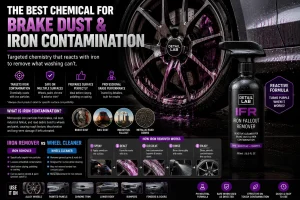
Clay bars and iron removers pull embedded contaminants out of the paint surface, preparing it for polishing or protection.
Dual Action Polisher
A dual action polisher is commonly considered essential for professionals, offering safer, more controlled paint correction than hand application.
Rotary Polisher
A rotary polisher provides stronger cutting power for more advanced correction work, though it requires more skill to use safely — this is typically considered an advanced upgrade.
Compounds & Polishes
Cutting compounds and finishing polishes are used in stages to remove swirl marks, light scratches, and oxidation.
Polishing Pads
Different foam or microfiber pads are matched to each compound or polish stage, from heavy cutting to final finishing.
Paint Inspection Equipment
Swirl-finder lights and inspection lamps help detailers evaluate paint condition before and after correction work.
Paint Protection Products
Sealants and ceramic coatings are applied after correction to protect the paint and extend the life of the finish.
DIY Car Detailing: Pros and Cons
Advantages:
- Lower initial investment than a full professional setup
- Convenient for washing and maintaining a vehicle at home
- A practical learning opportunity for building detailing skills
- Full personal control over products and technique
- Well suited to regular, routine maintenance
Limitations:
- Takes more time due to manual application
- Involves a learning curve for proper technique
- Limited equipment restricts more advanced tasks
- Paint correction is more difficult without powered tools
- Requires storage space for buckets, towels, and chemicals
Professional Car Detailing Kit: Pros and Cons
Advantages:
- Greater equipment capability for demanding jobs
- Faster overall workflow, especially across multiple vehicles
- Enables advanced paint correction
- Access to professional-level tools and chemicals
- Better suited to frequent or business-level detailing
Limitations:
- Higher upfront investment
- Steeper learning curve, especially for powered tools
- More equipment to maintain and store
- Additional storage requirements for a larger toolset
Which Kit Is Better for Beginners?
Most beginners should start with a simple DIY auto detailing kit. Essential products like shampoo, wheel cleaner, and microfiber towels are easy to use safely, and mistakes with basic tools are far less costly than mistakes made with a rotary polisher.
A DIY kit also helps beginners learn the correct process step by step — washing, drying, and interior cleaning before adding complexity. This builds the technique and confidence needed later.
Beginners should consider upgrading once they feel confident with basic maintenance and want to address paint imperfections, apply ceramic coatings, or detail vehicles more frequently. Professional equipment should not be a default beginner purchase, since the learning curve and cost are harder to justify without a clear need.
Which Kit Is Better for Professional Detailers?
Professional detailers typically need more powerful equipment, a larger product selection, and multiple microfiber towel types for different tasks (glass, paint, wheels, interior) to avoid cross-contamination.
Paint correction tools such as dual action or rotary polishers, along with specialized chemicals for decontamination and protection, are central to professional work. Efficient workflow equipment pressure washers, foam cannons, and extraction tools allows professionals to complete more vehicles in less time.
Durability and repeat-use efficiency matter here, since professional tools are used far more often than consumer tools. This doesn’t mean every professional product will outlast every DIY product in every case, but equipment built for commercial use is generally designed with heavier workloads in mind.
DIY vs Professional Detailing Cost
Rather than fixed prices, it helps to think about cost in terms of value. The initial investment for a DIY kit is lower, since it covers fewer tools and simpler chemicals. A professional setup involves a larger initial investment because it includes powered equipment and a wider product range.
Replacement costs and equipment upgrades also differ. DIY consumables like shampoo and towels need routine replacing, while professional equipment may need occasional maintenance or pad and accessory replacement.
Product consumption tends to be higher for professionals simply due to vehicle volume, while a DIY user consumes products more slowly.
Time investment matters too. DIY detailing takes longer per session but requires no specialized training. Professional workflows are faster once mastered, though the time to learn the equipment adds to the overall investment.
In terms of long-term value, the cheapest kit is not always the best value if it doesn’t meet your actual needs, and the most expensive kit is not always necessary if your detailing needs stay simple. Matching the kit to your real usage is what actually determines value.
DIY vs Professional Detailing Workflow
DIY Car Detailing Process
- Prepare the vehicle
- Clean wheels
- Pre-rinse
- Wash
- Dry
- Clean interior
- Clean glass
- Dress tires
- Final inspection
Professional Detailing Process
- Vehicle inspection
- Pre-wash
- Foam wash
- Wheel and tire decontamination
- Contact wash
- Drying
- Paint decontamination
- Paint inspection
- Paint correction if required
- Paint protection
- Interior deep cleaning
- Final quality inspection
Professional workflows include additional stages because they aim to identify and correct paint issues, not just clean the surface. Decontamination, inspection, and correction steps address problems that a standard wash cannot fix, which is why the professional process takes longer to master but produces more thorough results.
Can a DIY Kit Produce Professional-Looking Results?
Yes, within limits. Product quality, technique, preparation, and vehicle condition all play a role in how a wash turns out. A well-maintained vehicle washed carefully with quality DIY products can look clean, glossy, and well cared for.
However, advanced correction removing swirl marks, oxidation, or deeper scratches requires equipment like a dual action polisher along with compounds and pads. A DIY kit alone typically cannot address these issues.
Excellent maintenance results are realistic with a good DIY kit and consistent technique. Advanced restoration work, on the other hand, generally requires professional equipment and experience to execute safely and effectively.
When Should You Upgrade From DIY to Professional Equipment?
Consider upgrading when:
- You detail vehicles frequently, not just occasionally
- You want to offer detailing as a business or side service
- You need to perform paint correction
- You want a faster, more efficient workflow
- You need specialized equipment for tasks a DIY kit can’t handle
- You are comfortable with advanced detailing techniques and ready to learn new tools safely
How to Build a Hybrid Detailing Kit
Not every upgrade requires a full professional setup. A hybrid approach combines affordable DIY essentials with a few carefully chosen professional tools, letting you improve results without a large jump in cost or complexity.
Basic DIY Essentials + Professional Upgrades might include:
- A foam cannon added to speed up the wash stage
- Higher-quality drying towels for faster, safer drying
- Advanced wheel brushes for tighter spaces
- A dual action polisher for light paint correction
- A paint inspection light to check surface condition
- Decontamination products like clay bars or iron removers
This gradual approach lets enthusiasts build skill and confidence one tool at a time, rather than purchasing a complete professional setup all at once.
Common Mistakes When Choosing Between DIY and Professional Kits
- Buying more equipment than your actual detailing needs require
- Choosing products based only on price instead of fit for purpose
- Buying professional tools without learning how to use them safely
- Ignoring product compatibility between chemicals and surfaces
- Buying too many chemicals that go unused or expire
- Mixing wheel and paint tools, which risks cross-contamination and swirl marks
- Expecting a kit alone to replace proper technique and preparation
- Choosing a full professional kit for occasional, basic cleaning needs
Professional vs DIY Kit: Who Should Buy What?
| User Type | Recommended Kit | Why |
| First-time detailer | DIY kit | Simple, beginner-friendly, low risk |
| Weekend enthusiast | DIY kit | Matches occasional, routine maintenance needs |
| Daily driver owner | DIY kit | Covers regular washing and upkeep effectively |
| Luxury vehicle owner | Hybrid kit | Benefits from added paint care without full professional cost |
| Mobile detailer | Professional kit | Needs efficient, repeatable equipment for multiple vehicles |
| Detailing business | Professional kit | Requires volume-ready, durable equipment |
| Experienced enthusiast | Hybrid kit | Ready for selected upgrades without a full setup |
| Paint correction specialist | Professional kit | Requires polishers, compounds, and inspection tools |
How to Upgrade Your Detailing Kit Over Time
Stage 1: DIY Essentials Focus on basic cleaning and maintenance — shampoo, wash mitt, buckets, and microfiber towels. Master safe washing and drying technique before adding tools.
Stage 2: Advanced DIY Add decontamination products like clay bars, plus better-quality towels and brushes. Build comfort with more detailed steps like glass and interior care.
Stage 3: Professional Equipment Introduce paint correction tools such as a dual action polisher, along with inspection lights and protection products. This stage requires confidence with technique and a solid understanding of paint safety, since powered tools carry a higher risk of damage if used incorrectly.
Frequently Asked Questions
What is the difference between a professional car detailing kit and a DIY kit?
A professional kit includes powered equipment and specialized chemicals built for frequent, advanced work, while a DIY kit focuses on simpler tools for routine home maintenance.
Is a professional car detailing kit worth it?
It’s worth it for frequent detailers, businesses, or anyone who needs paint correction. For occasional home use, a DIY kit is often more practical.
Can I get professional results with a DIY detailing kit?
You can achieve clean, well-maintained results with good technique, but advanced correction work generally requires professional tools.
What should a DIY auto detailing kit include?
Shampoo, a wash mitt, buckets with a grit guard, microfiber towels, wheel cleaner, interior cleaner, and glass cleaner cover the basics.
What equipment do professional detailers use?
Common equipment includes pressure washers, foam cannons, dual action or rotary polishers, steam cleaners, and specialized decontamination products.
Should beginners buy professional detailing tools?
Not usually. Beginners benefit more from mastering basic technique with a DIY kit before introducing powered equipment.
How much does a professional detailing setup cost?
Costs vary widely based on brand, equipment quality, and product range, so it’s best to compare current pricing directly with suppliers.
When should I upgrade from a DIY detailing kit?
Upgrade when you detail more frequently, want to offer detailing services, or need paint correction and faster workflows.
Is a professional kit necessary for paint correction?
Yes, paint correction typically requires a polisher, compounds, and pads that aren’t included in standard DIY kits.
Can a DIY kit be used for ceramic coating?
Many consumer-grade ceramic coatings can be applied with basic tools, though proper paint preparation is still essential for good results.
Which detailing kit is best for occasional car cleaning?
A DIY kit is generally the better fit for occasional cleaning, since it covers routine maintenance without unnecessary equipment.
What is the best auto detailing kit for beginners?
A simple DIY kit with shampoo, a wash mitt, buckets, and microfiber towels gives beginners a solid, low-risk starting point.
Final Recommendation
Choose a DIY detailing kit if:
- You detail your own vehicle
- You are a beginner
- You detail occasionally
- You mainly need cleaning and maintenance
Choose a professional car detailing kit if:
- You detail vehicles frequently
- You run a detailing business
- You perform paint correction
- You need advanced equipment
- You want a more efficient professional workflow
Choose a hybrid kit if:
- You are an experienced enthusiast
- You want to gradually upgrade
- You need selected professional tools without buying a complete professional setup
Conclusion
The choice between a professional car detailing kit and a DIY setup comes down to how you actually plan to use it. DIY kits offer an affordable, approachable way to maintain a vehicle’s appearance, while professional kits provide the equipment and capability needed for frequent, advanced, or business-level detailing.
Your ideal setup depends on your experience, budget, how often you detail, your vehicle’s condition, the results you’re aiming for, and the type of detailing work involved. Start with the equipment you genuinely need today, and upgrade gradually as your skills and detailing goals grow.